
Uganda Safari Planning Hub – The Complete Guide to Planning Your Dream Safari
You have almost certainly already decided that a Uganda safari is happening. What you are looking for now is the detail: how much it actually costs, when to go, which park suits you, what a gorilla permit really involves, what to pack, and how to turn all of that into a booked, confirmed, worry-free trip.
This is the page we wished existed when we started planning safaris ourselves. It is built as a working planning hub rather than a single narrative article — use the jump-menu below to go straight to the decision you are trying to make, come back to it as many times as you need while you plan, and treat the tables and checklists as tools, not just reading material.
A note on how this page fits together with our other Uganda content: if you want the full story of Uganda — its wildlife, its regions, its culture, told as one long read — our Ultimate Uganda Safari Travel Guide (2026–2027) is the place for that. This page is the companion to it: less narrative, more decision-making — cost breakdowns, budget planning, printable checklists, traveller-type guides, and itineraries running from a one-day taster to a full 21-day, multi-country expedition. Read one, or both — they are built to be used together.
Everything below reflects 2026 pricing, entry requirements and on-the-ground conditions as we understand them at the time of writing, cross-checked against the Uganda Wildlife Authority, Uganda’s immigration portal, and international health and travel advisories. Fees set by government bodies do change, so we have flagged anywhere you should double-check the current figure before you book — and we would always rather tell you “confirm this with us” than quote you a stale number.
Quick Navigation
Getting Started
- Why Visit Uganda
- Why Book with Certified Safaris Uganda
- Step-by-Step Guide to Planning a Uganda Safari
- First-Time Safari Guide
Budgeting & Packing
- Uganda Safari Cost Guide
- Uganda Safari Budget Planner
- Luxury vs Mid-Range vs Budget Safaris
- Uganda Safari Packing List
When to Go
Gorillas, Chimps & Parks
Planning by Traveller Type
- Choosing the Right Safari
- Family Safari Planning
- Solo Traveller Guide
- Honeymoon Safari Planning
- Senior Traveller Guide
- Student and Backpacker Guide
- Birding Safari Planning
- Photography Safari Planning
Entry Requirements & Health
- Uganda Visa Guide
- Passport Requirements
- Yellow Fever Requirements
- Vaccinations
- Malaria Prevention
- Travel Insurance Guide
- Health and Safety Guide
- Uganda Safety Guide
Money & Practicalities
- Money and Currency Guide
- Tipping Guide
- Mobile Money
- Credit Cards
- ATMs
- Internet and Wi-Fi
- SIM Cards
- Electricity and Power Plugs
Culture & Practical Life
Getting Around
Responsible & Inclusive Travel
- Responsible Tourism
- Sustainable Tourism
- Conservation
- Community Tourism
- Travel with Children
- Accessible Travel
Beyond Uganda
- Cross-Border Safaris
- Rwanda Extension Guide
- Kenya Extension Guide
- Tanzania Extension Guide
- Botswana Extension Guide
Plan It
- Suggested Uganda Safari Itineraries (1–21 Days)
- Frequently Asked Questions
- Plan Your Safari with Certified Safaris Uganda
Tip: if you paste this page into a WordPress table-of-contents block or plugin, the jump-links above will regenerate automatically from these headings.
Why Visit Uganda
Uganda earned the nickname “Pearl of Africa” more than a century ago, and it remains one of the few travel clichés that undersells the reality rather than oversells it. Here is the honest case for putting it on your shortlist.
You can spend an hour with mountain gorillas. Uganda is home to roughly half of the world’s remaining wild mountain gorillas, tracked across Bwindi Impenetrable National Park and Mgahinga Gorilla National Park. This is not a “might get lucky” wildlife sighting; it is a structured, ranger-led encounter with a habituated family, and for most people who do it, it becomes the single most-talked-about hour of their travelling life.
It is the most complete primate destination on Earth. Thirteen primate species live here, including chimpanzees at Kibale National Park (the highest density in East Africa), golden monkeys around Mgahinga, and eleven others alongside them. Few countries let you combine gorillas and chimpanzees in a single trip without long-haul flights between them.
It punches well above its size. At around 241,000 km² — smaller than the UK, roughly the size of the US state of Oregon — Uganda packs rainforest, savannah, wetland, volcanic highland and semi-arid wilderness into driving distances that are genuinely manageable, so a two-week trip can legitimately cover four or five completely different landscapes.
The value case is real. A Uganda gorilla permit runs at roughly half the price of the equivalent permit in Rwanda, and a full Uganda safari package typically costs less than a comparable Kenyan or Tanzanian itinerary of the same standard, without giving up quality of guiding or accommodation.
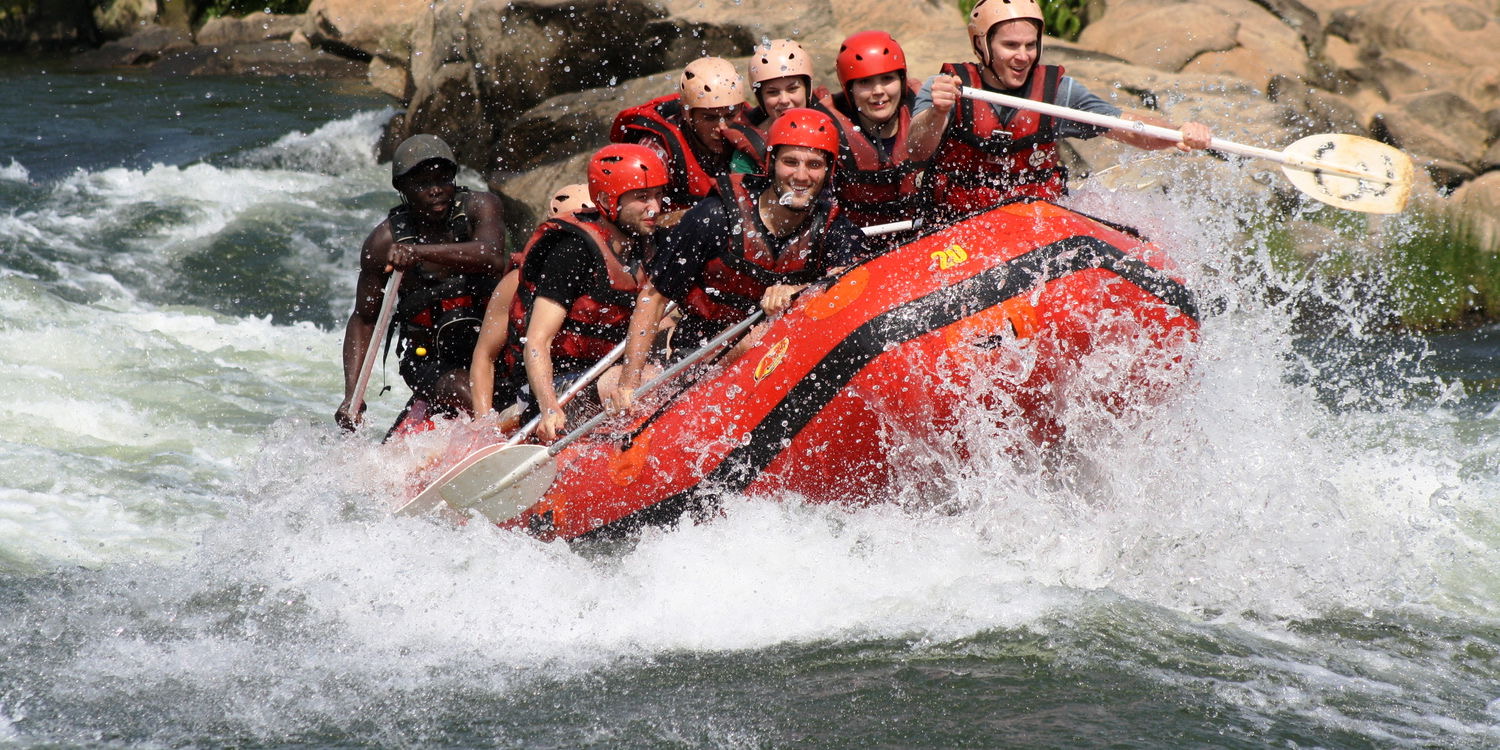
It is a genuine Big Five and wildlife destination, not only a primate one. Queen Elizabeth National Park and Murchison Falls National Park deliver classic savannah game drives, boat cruises thick with hippo and crocodile, and a rhino conservation story now unfolding in Kidepo Valley (more on that in our National Parks Guide).
Birders rate it among the best countries on the planet. Over 1,000 recorded species — more than 11% of the world’s total — in a country the size of Great Britain, headlined by the prehistoric-looking shoebill stork at Mabamba Swamp.
It is still uncrowded. You will not find the vehicle pile-ups around a single sighting that can happen in the Masai Mara or Serengeti during peak season. Uganda’s parks feel personal, partly because fewer people know to come here yet.

The culture runs as deep as the wildlife. From Batwa forest communities around Bwindi, to the pastoralist Karamojong of the remote northeast, to the historic Buganda Kingdom centred on Kampala, Uganda rewards travellers who want more than a wildlife checklist. We cover this properly in our Community Tourism section below.
Whether gorillas, birding, white-water adventure or the promise of a safari that does not look like everyone else’s holiday photos brought you here, the rest of this hub is built to help you turn that interest into a properly planned, correctly budgeted, fully booked trip.
Why Book with Certified Safaris Uganda
There is no shortage of companies offering to plan a Uganda safari for you. Here is what we think genuinely matters when you are choosing one, and where we stand on each point.
A Real, Licensed, Locally Based Operator
Certified Safaris Uganda is a locally owned tour operator based on Lower Kololo Terrace in Kampala, licensed by the Uganda Tourism Board (licence UTB/RTT/TT/2023/100909) — a number you can check, not a badge we invented. Reservations, ground logistics, driver-guides and leadership all sit under one roof in Kampala. Nothing is subcontracted to an unnamed third party once you have paid.
We Know These Parks by Sector, Not by Brochure
We know Bwindi Impenetrable National Park by its four trekking sectors — Buhoma, Ruhija, Rushaga and Nkuringo — and which one suits your fitness level, travel dates and lodge choice. We know the Ishasha sector of Queen Elizabeth National Park is worth the extra driving hours for its tree-climbing lions, and that Kidepo Valley rewards travellers who can spare the extra days to reach it. That is knowledge you only get from actually being here, season after season.
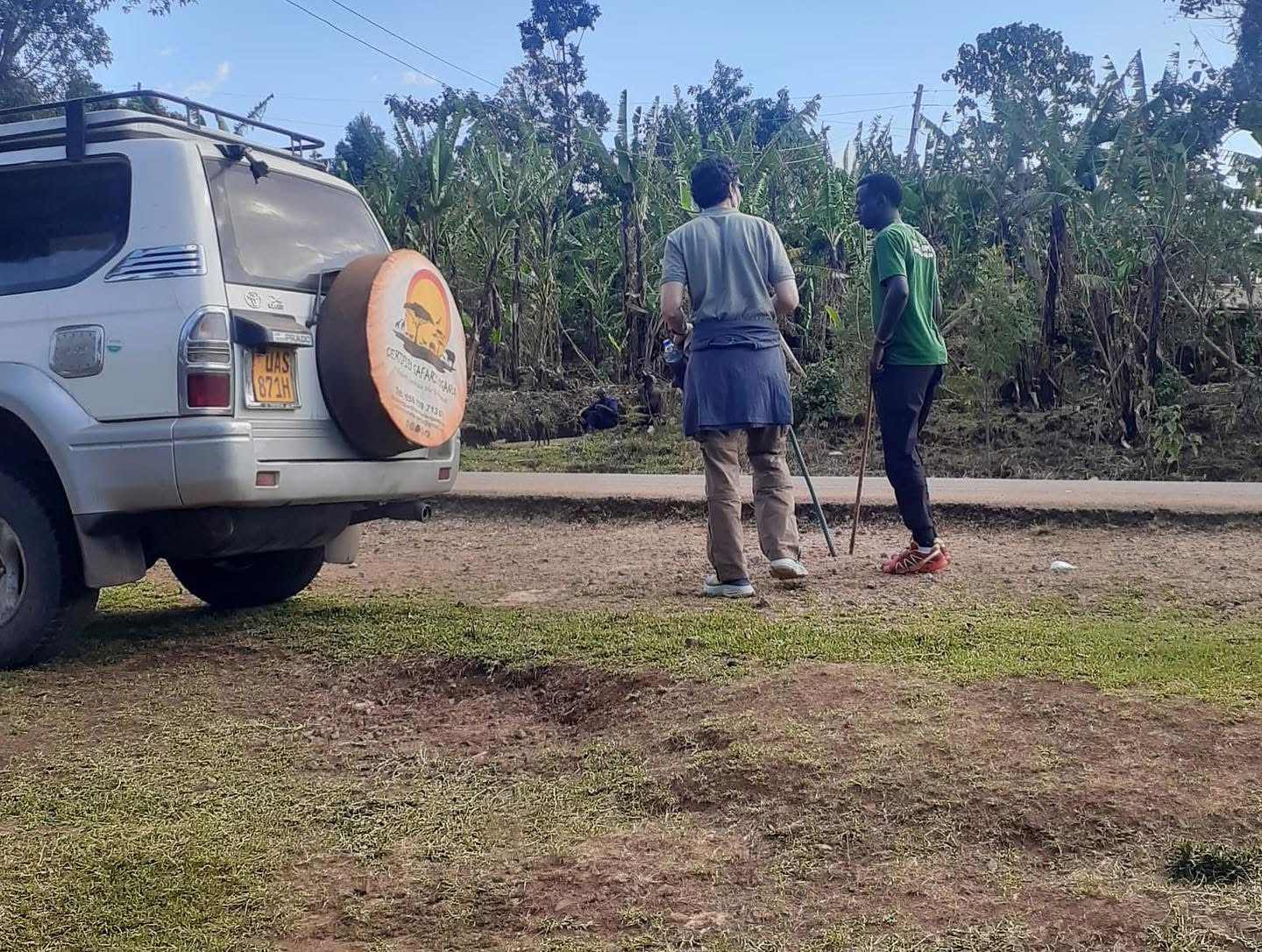
Genuinely Tailor-Made, Not a Fixed Departure
Almost every itinerary we run is privately built around your dates, budget, fitness level and interests — not a scheduled group tour you have to fit yourself into. Whether it is a single gorilla trekking permit or a three-week multi-country circuit, the plan starts from a conversation, not a template.
Honest, Itemised Pricing
Gorilla and chimpanzee permits, park fees, accommodation and transport are itemised clearly so you know exactly what you are paying for. We would rather tell you a different season or park combination suits you better than sell you the wrong trip.
Trust Signals Worth Checking Yourself
- 5+ years guiding safaris across Uganda, Kenya, Tanzania, Rwanda and Botswana
- 278+ travellers guided — backpackers, students, families, couples, solo travellers and organisational teams
- 20+ Google reviews and 18+ TripAdvisor reviews from past guests, alongside five-star ratings on SafariBookings, Your African Safari (YAS), SafariDeal and TourHQ
- UWA-permitted partners only for every gorilla and chimpanzee trek we arrange
- A dedicated self-drive and 4×4 rental partnership with Car Hire Africa for travellers who want their own vehicle with gorilla permit support built in
The Same Small Team, Start to Finish
You deal with the same people throughout — CEO Nandyose Carol stays closely involved in how every itinerary is built, and Reservation Officer Whitney Ndyose typically manages your enquiry from first contact through to confirmed permits, accommodation and transport. When you email or WhatsApp us, a real person who knows your itinerary replies — not a rotating call centre.
Ready to see how this works in practice? Browse our full range of Uganda safari packages, explore what we cover by tour type, or jump straight to planning your trip step by step below.
Step-by-Step Guide to Planning a Uganda Safari
Planning a Uganda safari properly means getting a handful of decisions right, roughly in this order. Skipping ahead — booking flights before permits, for instance — is the single most common planning mistake we see.
Step 1: Set Your Travel Dates (or a Window)
Gorilla and chimpanzee permits are the scarcest resource in Ugandan tourism, and everything else — flights, lodges, vehicles — is built around them. Decide on a firm date or a flexible window before anything else.
Step 2: Decide If Gorilla Trekking Is In or Out
This single choice shapes your whole itinerary, your budget, and your minimum trip length. If gorillas are the priority, work backwards from permit availability. If you are more drawn to classic game viewing and birding, you have far more flexibility on dates and route.
Step 3: Book Your Gorilla and/or Chimpanzee Permits
As of March 2026, UWA requires full payment at the time of booking — there is no longer a system that lets an operator hold a permit for a week while you decide. Book 3–6 months ahead as standard, and 6–10 months ahead for June–September or December–February travel. See our full Gorilla Trekking Planning Guide below.
Step 4: Choose Your Route and Parks
Match parks to your time and interests using our National Parks Guide and the Choosing the Right Safari section below. Uganda rewards depth over breadth — two or three parks done properly beats a rushed five-park dash.
Step 5: Pick Your Comfort Tier
Decide roughly where you sit between budget, mid-range and luxury — see our Luxury vs Mid-Range vs Budget comparison — since this determines your lodge shortlist and vehicle type.
Step 6: Sort Your Visa and Health Requirements
Apply for your Uganda e-Visa, confirm your yellow fever vaccination, and book travel insurance with medical evacuation cover. None of this is instant, so start it as soon as your dates are fixed — see our Uganda Visa Guide and Health and Safety Guide.
Step 7: Book Flights and Confirm Your Ground Arrangements
Book your international flights into Entebbe once permits are confirmed, not before. Finalise your vehicle, driver-guide and lodge bookings alongside this.
Step 8: Pack, Prepare, and Reconfirm
In the final month, reconfirm all bookings, print your key documents, and work through our packing checklist.
Printable Pre-Trip Planning Timeline
Use this as a checklist against your own calendar. Tick items off as you go — it works equally well printed out or copied into a notes app.
6–12 months before travel
3–6 months before travel
4–6 weeks before travel
1–2 weeks before travel
Final 48 hours
First-Time Safari Guide
If this is your first-ever safari anywhere — not just your first trip to Uganda — a few things are worth knowing before you build expectations from documentaries and Instagram.
Wildlife sightings are not guaranteed, except for one thing: gorilla trekking. Because habituated gorilla families are actively tracked daily by rangers, the encounter itself is close to guaranteed once you are on a trek. General game drives are different — sightings depend on season, luck, and how much ground your guide covers, which is exactly why a knowledgeable driver-guide matters more than most first-timers expect.
The days are longer and earlier than a typical holiday. Wildlife is most active at dawn and dusk, so safari days often start before 6:00 AM. This is normal, not a sign of a poorly run trip.
Distances take longer than they look on a map. Ugandan park roads are frequently unpaved, and a “200 km” transfer can easily take four or five hours. Build buffer time into any itinerary rather than stacking activities too tightly.
A private vehicle and guide is worth the extra cost for first-timers. Beyond driving, your guide is your wildlife spotter, translator, safety briefing and problem-solver rolled into one — genuinely different from a self-guided trip in a rental car.
One park properly beats four parks rushed. The single biggest planning mistake first-time safari-goers make anywhere in Africa is over-scheduling. Two or three parks with two full nights each will consistently beat five parks with one night apiece.
Bring more patience than you think you need, and fewer expectations of a scripted wildlife-documentary experience. Some of the best moments — an elephant herd crossing the road in front of you, an unplanned stop for a rare bird — happen because nothing was rushed.
Ask your operator questions before you book, not after. Fitness level for gorilla trekking, realistic daily distances, what is and is not included in a quoted price — a good operator answers all of this clearly before you commit, which is exactly the approach we take; see our Uganda Safari Cost Guide next for a full, itemised breakdown of what you are actually paying for.
Uganda Safari Cost Guide
A Uganda safari is built from a small number of cost components, and understanding each one separately makes it far easier to spot a fair quote from an inflated one — or a suspiciously cheap one missing something important.
The Cost Components, Explained
Gorilla and/or chimpanzee permits — fixed government fees, identical across every operator. This is the one line item no company can legitimately discount.
Accommodation — the single biggest lever on your total cost, ranging from simple guesthouses near park gates to architecturally striking luxury lodges.
Vehicle, driver-guide and fuel — usually quoted per vehicle and split across your group, so a solo traveller pays proportionally more than a group of four sharing one 4×4.
Park entrance fees — separate from trekking permits, payable per day in each national park you visit.
Domestic flights (optional) — scheduled light-aircraft transfers between parks, which trade cost for time.
International flights — priced independently of your ground safari and usually the most volatile cost by origin and season.
Uganda e-Visa — $50 plus a small processing fee, or $100 for the East African Tourist Visa if you are combining countries.
Travel insurance — genuinely non-optional; budget roughly 4–8% of your total trip cost depending on age, cover level and evacuation limits.
Tips — customary, not legally required; see our full Tipping Guide.
Meals and incidentals — largely covered by lodges on an all-inclusive or half-board basis, with a modest daily allowance for drinks, souvenirs and extras.
Gorilla Permit vs Chimpanzee Permit: Cost Comparison
| Gorilla Trekking Permit | Chimpanzee Trekking Permit | |
|---|---|---|
| Standard price (foreign non-resident) | $800 | ~$250 (Kibale) |
| Low-season / alternative-site price | $600 (April, May, November only) | ~100(KyamburaGorge)/ 130 (Budongo Forest) |
| Habituation experience | ~$1,800 (up to 4 hours) | ~$300 (Kibale, full day) |
| Foreign resident price | $700 (standard) | Discounted rate, confirm with operator |
| East African citizen price | Approx. UGX 300,000 | Discounted local rate |
| Time with the animals | 1 hour (standard) | 1 hour (standard) |
| Minimum age | 15 | Typically 12 (confirm by site) |
| Where | Bwindi Impenetrable NP, Mgahinga Gorilla NP | Kibale NP, Kyambura Gorge (Queen Elizabeth NP), Budongo Forest (Murchison Falls NP) |
| Booking lead time | 3–6 months (6–10 for peak season) | 6–8 weeks generally sufficient |
| Payment terms | Full payment required at booking (since March 2026) | Full payment at booking |
Prices are set by the relevant wildlife authority and reviewed periodically — always confirm the current rate when you book, and treat the figures above as accurate at time of writing rather than fixed forever.
What a Realistic Total Looks Like
As a general steer, excluding international flights:
- Budget safari: roughly 100–200 per person, per day, before permits
- Mid-range safari: roughly 250–500 per person, per day, before permits
- Luxury safari: roughly 700–1,500+ per person, per day, before permits
Add your permit costs on top of whichever daily rate applies, since permits are fixed regardless of comfort tier. A gorilla trek is the same $800 whether you sleep in a $60 guesthouse or a $900-a-night lodge that evening.
For a fully worked example across different trip lengths and comfort tiers, use the budget planner directly below.
Uganda Safari Budget Planner
Use this planner to build a realistic estimate for your own trip. Start with your trip length and comfort tier, then add the fixed costs that apply regardless of budget.
Step 1: Your Daily Ground Cost (Per Person)
| Trip length | Budget tier ($100–200/day) | Mid-range tier ($250–500/day) | Luxury tier ($700–1,500+/day) |
|---|---|---|---|
| 3 days | 300–600 | 750–1,500 | 2, 100–4,500 |
| 5 days | 500–1,000 | 1, 250–2,500 | 3, 500–7,500 |
| 7 days | 700–1,400 | 1, 750–3,500 | 4, 900–10,500 |
| 10 days | 1, 000–2,000 | 2, 500–5,000 | 7, 000–15,000 |
| 14 days | 1, 400–2,800 | 3, 500–7,000 | 9, 800–21,000 |
Step 2: Add Your Fixed Costs
| Fixed cost | Typical amount |
|---|---|
| Gorilla trekking permit | $800 (or $600 in low season) |
| Chimpanzee trekking permit (Kibale) | ~$250 |
| Uganda e-Visa | ~$51.50 |
| Travel insurance | 4–8% of total trip cost |
| Tips (driver-guide, trekking guide, porters) | 150–300 for a 7-day trip |
| Domestic flights (if used) | 150–400 per sector |
Step 3: A Worked Example
A two-person, 7-day mid-range trip combining gorilla trekking and classic game viewing:
| Item | Approximate total (2 people) |
|---|---|
| Ground cost (mid-range, 7 days, per Step 1) | 3, 500–7,000 |
| Gorilla permits ×2 | $1,600 |
| Uganda e-Visas ×2 | ~$103 |
| Travel insurance ×2 | ~400–800 |
| Tips | ~300–500 |
| Approximate total (excluding international flights) | 5, 900–10,000 |
Your own number will move up or down based on lodge selection, whether you add chimpanzee tracking, and whether you use domestic flights instead of road transfers. Contact our team with your dates and interests and we will turn this planner into a real, itemised quote.
Luxury vs Mid-Range vs Budget Safaris
None of these tiers is the “wrong” way to safari in Uganda — they suit different priorities, and plenty of travellers mix tiers across one trip (a luxury lodge for the gorilla trekking nights, mid-range everywhere else, for example).
| Budget Safari | Mid-Range Safari | Luxury Safari | |
|---|---|---|---|
| Typical cost (per person, per day) | 100–200 | 250–500 | 700–1,500+ |
| Accommodation | Guesthouses, campsites, simple lodges near park gates | Comfortable ensuite lodges and tented camps | Premium tented camps and lodges, private verandas |
| Vehicle & guide | Shared or small-group vehicle | Private 4×4 with dedicated driver-guide | Private vehicle, sometimes with a personal guide throughout |
| Transfers | Road only | Road, with optional domestic flights | Fly-in transfers standard between parks |
| Gorilla experience | Standard permit | Standard permit | Standard permit or habituation experience ($1,800, up to 4 hours) |
| Meals | Simple, sometimes self-catered | Full board, lodge restaurant | Fine dining, often with private setups available |
| Best suited to | Backpackers, students, tight budgets willing to trade comfort for cost | Most first-time visitors — the genuine sweet spot of cost and comfort | Honeymooners, milestone trips, travellers prioritising privacy and comfort |
Making Budget Work Without Cutting the Wrong Corners
A well-run budget trip does not mean a compromised one. The moves that genuinely reduce cost without reducing the experience:
- Travel in low season (April, May, November) for the discounted $600 gorilla permit and lower lodge rates across the board
- Join a small-group departure rather than a fully private vehicle, which is the single biggest per-person cost lever
- Base yourself at Lake Mburo National Park for a genuinely budget-friendly park with no big-game permit fee and walking safaris included in standard entry
- Use Ziwa Rhino Sanctuary instead of a full northern Big Five circuit if rhino sightings matter but a Kidepo detour does not fit your time or budget
The one cost that never moves regardless of tier is the permit fee itself — see the cost guide above for the full breakdown of what stays fixed and what flexes.
Uganda Safari Packing List
Uganda’s packing challenge is temperature swings, not extremes — a single trip combining Bwindi’s misty highlands with Murchison Falls’ hot savannah can move from a cool 10°C morning to a dry 30°C afternoon within the same week. Pack in layers, and use the checklists below rather than trying to remember everything at once.
General Clothing Checklist
Footwear & General Gear Checklist
Gorilla & Chimpanzee Trekking Extras Checklist
Health & Personal Items Checklist
Documents Checklist (Printable)
Photography Kit Checklist
We cover the reasoning behind several of these choices — why dark colours are a problem, why layers matter more than heavy coats — in the Uganda Weather by Month and What to Wear sections below.
Best Time to Visit Uganda
Sitting on the equator, Uganda does not have a summer/winter split — it has wet and dry seasons, and there is genuinely no bad month to visit. What actually changes month to month is trail difficulty, crowd levels and, specifically for gorilla and chimp permits, price.
For most first-time visitors, June–September or December–February remain the safest bet — firmer trails, easier trekking, and reliable game viewing as animals cluster around water sources. Book permits and lodges at least 6 months ahead for these windows.
For value and quieter parks, target April, May or November. These months bring the discounted $600 gorilla permit (down from $800) and $500 resident rate, plus lower lodge rates throughout. The trade-off is muddier trails and the fact that these specific discounted permits cannot be rescheduled once booked.
For birding, lean into the wetter months. March–May and October–November bring migrant species and resident birds in breeding plumage, making these the strongest windows for a dedicated birding safari.
Gorilla trekking itself happens year-round. Bwindi is a rainforest — it can rain in any month of the year — so “best time” is a question of trail conditions and cost, not availability.
Uganda Weather by Month
Because altitude does far more work than latitude here, your itinerary’s regional mix matters more than the calendar month alone. Use this table alongside the Uganda Seasons Explained section below.
| Month | Season | What to expect |
|---|---|---|
| January | Short dry season | Warm, reliable, popular over New Year |
| February | Short dry season | Good visibility, easier trekking, busy period |
| March | Long rains begin | Lush landscapes, rain increasing, fewer crowds |
| April | Long rains (peak) | Wettest month generally; discounted $600 gorilla permit |
| May | Long rains | Still wet but easing; discounted $600 gorilla permit |
| June | Long dry season begins | Peak season starts; excellent trekking conditions |
| July | Long dry season | Peak season; firm trails, strong game viewing |
| August | Long dry season | Peak season continues; busiest lodges |
| September | Long dry season ends | Still excellent conditions; peak season tapering |
| October | Short rains begin | Quieter parks, vibrant scenery, afternoon showers |
| November | Short rains | Discounted $600 gorilla permit; good birding |
| December | Short dry season begins | Popular for Christmas/New Year travel |
Regional Temperature Guide
| Region | Typical daytime | Typical night | Notes |
|---|---|---|---|
| Kampala & Entebbe | 24–28°C | 17–20°C | Mild and pleasant year-round |
| Bwindi & Mgahinga (highland southwest) | 15–20°C | 8–12°C | Genuinely cool and often misty — mornings can feel cold |
| Queen Elizabeth NP | 24–29°C | 16–19°C | Warm savannah days, comfortable evenings |
| Murchison Falls NP | 26–32°C | 18–21°C | Hot, drier savannah climate |
| Kidepo Valley NP | 28–35°C (dry season) | 15–18°C | Hottest days, sharply cooler nights |
| Rwenzori Mountains | Below freezing at altitude | Sub-zero above 4,000m | Genuine mountaineering conditions near the summit |
The practical packing takeaway: a single trip combining Bwindi gorilla trekking with a Murchison Falls game drive can swing from a chilly, misty 10°C morning to a dry 30°C afternoon in the same week — pack layers, not one “safari uniform.” See the full packing list above.
Uganda Seasons Explained
| Long Dry Season | Short Dry Season | Long Rains | Short Rains | |
|---|---|---|---|---|
| Months | June – September | December – February | March – May | October – November |
| Trekking conditions | Firm, easiest trails | Firm, easy trails | Muddy, slower going | Muddier, but rain often in short afternoon bursts |
| Crowds | Busiest | Second-busiest (Christmas/New Year peak) | Quietest | Quiet |
| Gorilla permit price | $800 standard | $800 standard | $600 in April & May | $600 in November |
| Game viewing | Excellent — animals cluster at water sources | Excellent | Good, lush scenery | Good, vibrant scenery |
| Birding | Solid | Solid | Excellent (migrants arrive) | Excellent (migrants arrive) |
| Best for | First-timers wanting the easiest, most reliable conditions | A slightly quieter alternative to June–September | Value-focused travellers comfortable with mud and rain | Birders and travellers who prioritise quieter parks |
Our honest take: if good weather, easy road conditions and reliable wildlife visibility across a multi-park itinerary matter most to you, June–September is the safer bet. If budget and crowd levels matter more than a slightly muddier trail, the green seasons are genuinely underrated rather than a compromise.
Gorilla Trekking Planning Guide
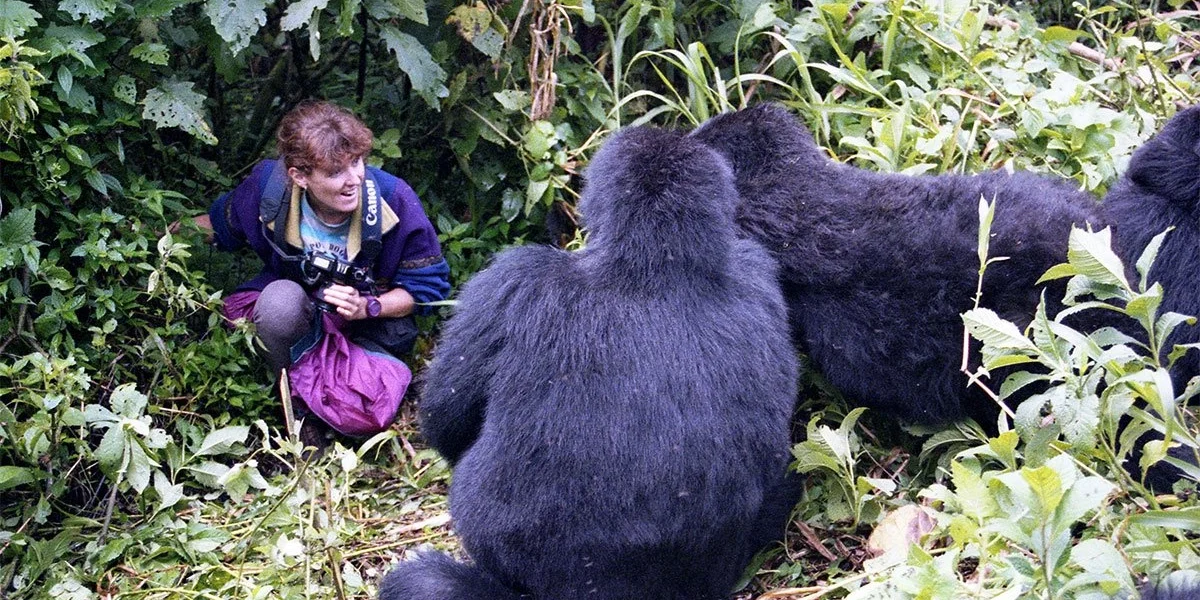
If one activity gets people onto a plane specifically for Uganda, it is this one. An hour spent a few metres from a wild mountain gorilla family — a silverback ignoring you entirely to keep eating, juveniles wrestling in the undergrowth — is consistently rated among the most powerful wildlife encounters available anywhere on Earth. Here is everything you need to plan yours properly.
Where Gorilla Trekking Happens in Uganda
Uganda has two gorilla trekking destinations, and choosing between them is one of your first real decisions.
| Bwindi Impenetrable National Park | Mgahinga Gorilla National Park | |
|---|---|---|
| Habituated families | ~19, across 4 sectors | 1 (the Nyakagezi family) |
| Daily permits available | ~152 | 8 |
| Terrain | Dense, steep rainforest | Volcanic slopes, more open |
| Extra activities on offer | Birding, Batwa cultural walks | Golden monkey trekking, volcano hikes |
| Best for | Most travellers — greater permit availability and sector choice | Travellers combining gorillas with volcano hiking or a Rwanda crossing |
Bwindi’s Four Trekking Sectors
Your permit is booked for one specific sector gate, so your lodge choice needs to sit a reasonable drive from that exact gate — not just “near Bwindi” in general. This is one of the details a local operator sorts out before you ever arrive.
- Buhoma — the original, most established sector, with the widest lodge choice and generally gentler terrain
- Ruhija — higher altitude, cooler, with strong birding alongside gorilla families
- Rushaga — the largest number of habituated families, including options for the gorilla habituation experience
- Nkuringo — the most physically demanding sector, with steep terrain but arguably the most dramatic scenery
Gorilla Permit Prices (2026)
Permits are issued exclusively by the Uganda Wildlife Authority and represent the single largest fixed cost of any gorilla trip.
| Permit type | Foreign non-resident | Foreign resident | East African citizen |
|---|---|---|---|
| Standard trek (1 hour) | $800 | $700 | ~UGX 300,000 |
| Low-season discount (April, May, November only) | $600 | $500 | — |
| Gorilla habituation experience (up to 4 hours) | ~$1,800 | — | — |
A few essentials worth repeating clearly:
- The permit covers park entrance for the day, a trained ranger guide, trackers and armed security. It does not cover transport to the trailhead, porters, or tips.
- Book 3–6 months ahead, and 6–10 months ahead for peak season or Christmas/New Year dates — permits genuinely do sell out.
- Full payment is required at booking. UWA removed the old system that let operators hold a permit for seven days before payment, so be ready to commit once you find your dates.
- Low-season discount permits cannot be rescheduled. If there is any real chance your dates will shift, the standard permit gives you far more flexibility despite the higher price.
We handle the entire permit booking process directly with UWA for our clients — get in touch with your preferred dates and we will confirm real-time availability before you commit to anything.
Uganda vs Rwanda for Gorilla Trekking
The comparison every serious planner asks about:
| Uganda | Rwanda | |
|---|---|---|
| Standard permit price | $800 | $1,500 |
| Habituated families/permit availability | Greater — more families, ~152 daily permits at Bwindi alone | Fewer daily permits available |
| Scenery | Dense, ancient rainforest | More dramatic volcanic backdrops |
| Airport-to-trailhead time | ~8–9 hours by road from Entebbe (or ~1 hour flight) | Shorter — Kigali airport sits closer to Volcanoes NP |
| Combinability | Easily combined with wider Uganda wildlife circuit | Easily combined with Uganda via East African Tourist Visa |
Many travellers now do both in a single trip, crossing overland between the two using the East African Tourist Visa, which covers Uganda, Kenya and Rwanda on one document. See our Rwanda Extension Guide below.
What to Expect on Trek Day
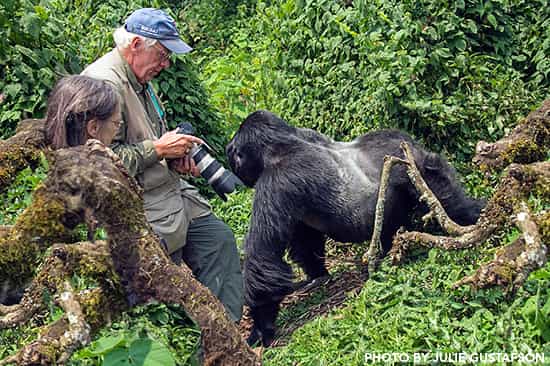
- Early registration, typically 7:00–7:30 AM at your sector’s park headquarters, with a briefing on rules and etiquette
- Group size capped at 8 visitors per gorilla family
- Unpredictable hike length — anywhere from 1–2 hours to a demanding 6–8 hours, since gorilla families move daily and trackers head out ahead of tourist groups to locate them first
- One hour with the gorillas, strictly enforced, to limit stress on the animals and reduce disease transmission risk
- Rules that matter: keep roughly 7–10 metres from the gorillas, speak quietly, no flash photography, no eating or drinking near them
- You will not be permitted to trek if visibly unwell — gorillas share close to 98% of human DNA and are highly susceptible to human respiratory illnesses
- Minimum age is 15, with no upper age limit provided you are reasonably fit

How Fit Do You Need to Be?
Realistically fit, not athlete-fit. You should be comfortable walking continuously on uneven, sometimes steep and muddy ground for a few hours. Mention any fitness or mobility concerns when booking — some sectors and gorilla families are considerably easier to reach than others, and sedan chairs (a padded seat carried by a team of porters) are available in Bwindi for travellers who want the experience but cannot manage the trek unassisted.
Hiring a Porter
For roughly $15–20, a local porter will carry your bag and, more importantly, physically help you across difficult terrain. It is a genuinely worthwhile expense that directly supports the local community around the park — we recommend it to every guest, regardless of fitness level.
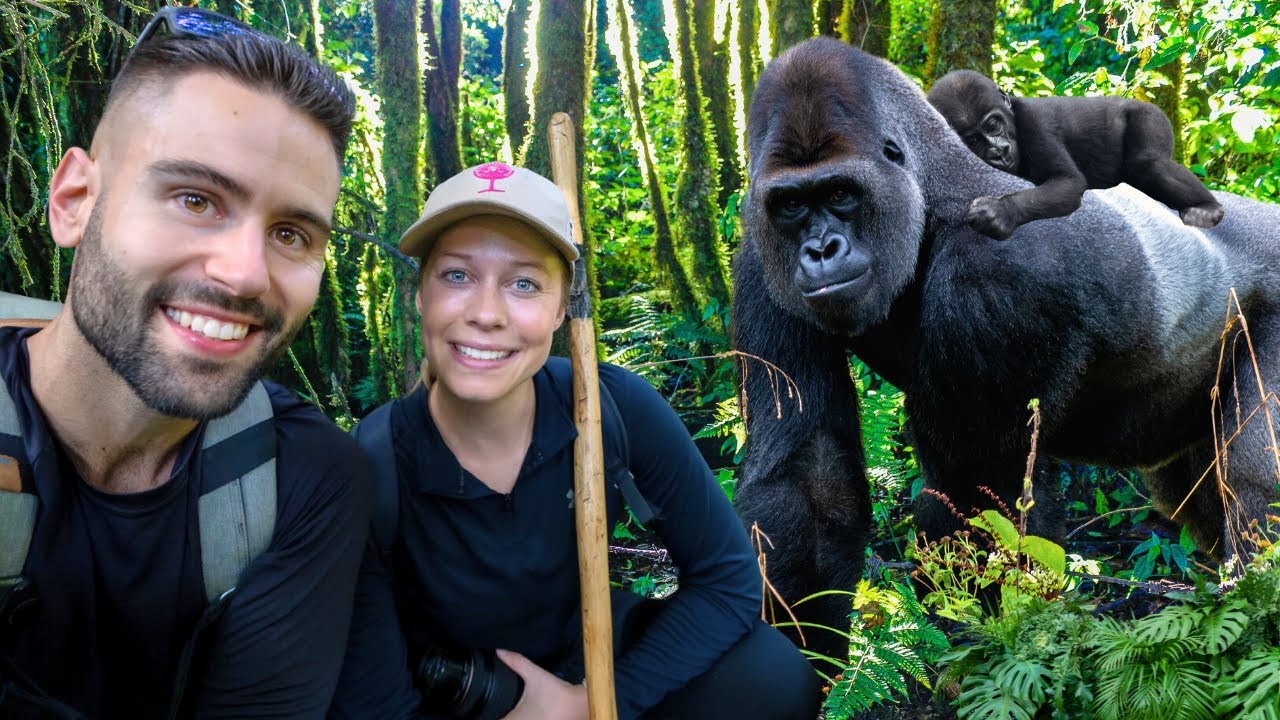
What to Pack Specifically for Gorilla Trekking
- Waterproof, broken-in hiking boots with ankle support
- Long trousers and a long-sleeved shirt, tucked in (the forest has biting ants and stinging nettles)
- Gardening or thin work gloves for grabbing vegetation on steep sections
- A light rain jacket, even in dry season
- A daypack with a rain cover, water and snacks
See our full gorilla trekking checklist above for the complete list, and our 7-day gorilla, chimpanzee and wildlife package if you would like to see exactly how this fits into a ready-built itinerary.
Chimpanzee Trekking Guide
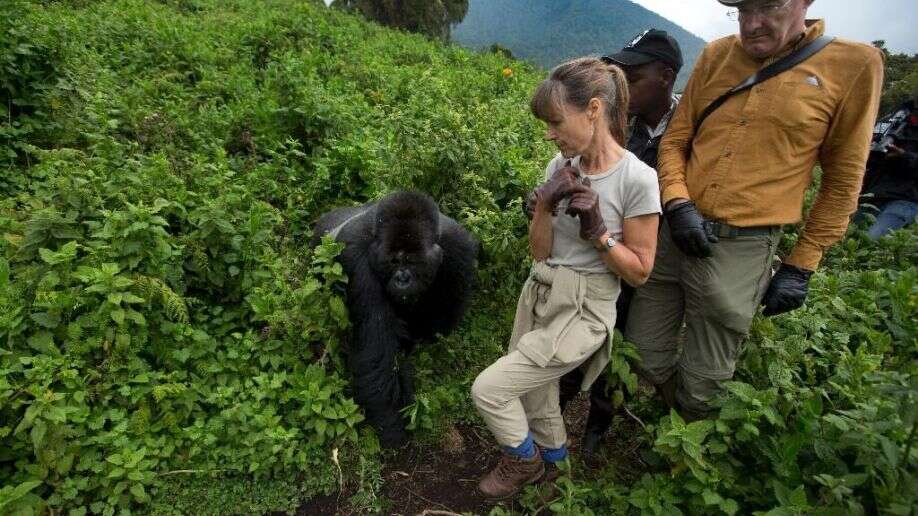
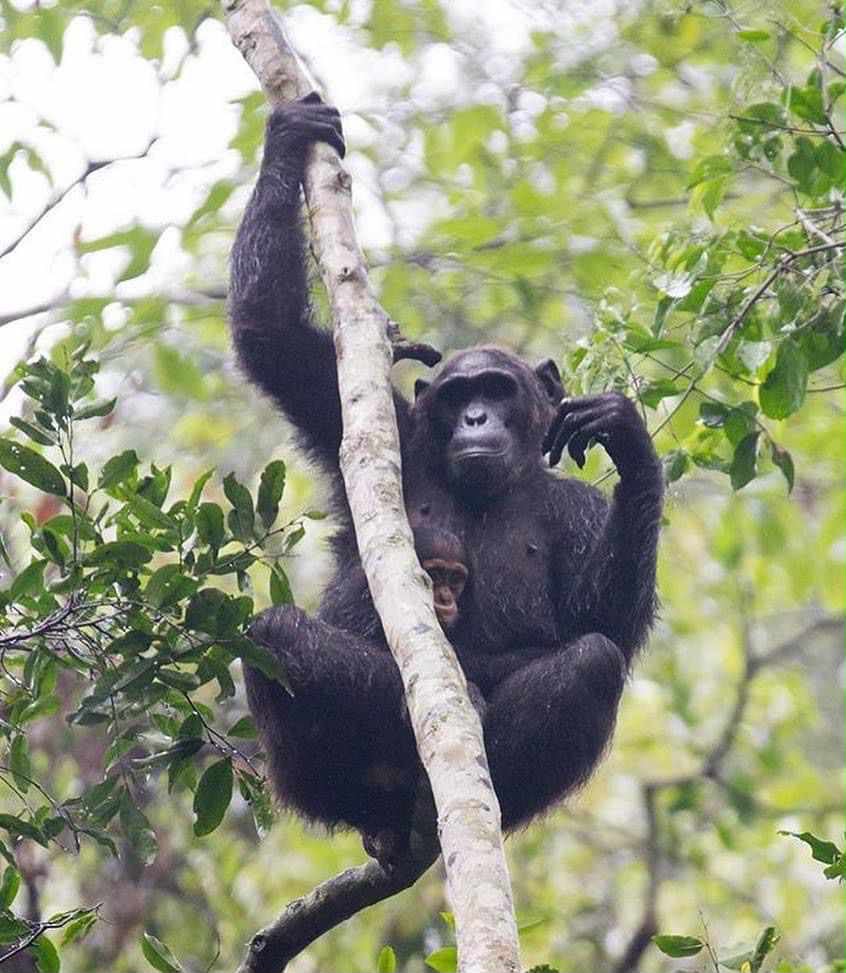
If gorilla trekking is Uganda’s headline act, chimpanzee tracking is arguably its most underrated one — cheaper, more physically accessible, and genuinely thrilling in its own right. Watching a wild chimpanzee community erupt into its characteristic pant-hoot chorus, echoing through the canopy, is an experience many travellers rate as highly as their gorilla trek.
Where to Track Chimpanzees
| Location | Foreign non-resident price | Notes |
|---|---|---|
| Kibale National Park | ~250standard/ 300 habituation | “Chimpanzee capital of East Africa” — highest density, 90%+ success rate |
| Kyambura Gorge (Queen Elizabeth NP) | ~$100 | Dramatic forested gorge, lower success rate but spectacular scenery |
| Budongo Forest (Murchison Falls NP) | ~$130 | Quieter, good if already visiting Murchison Falls |
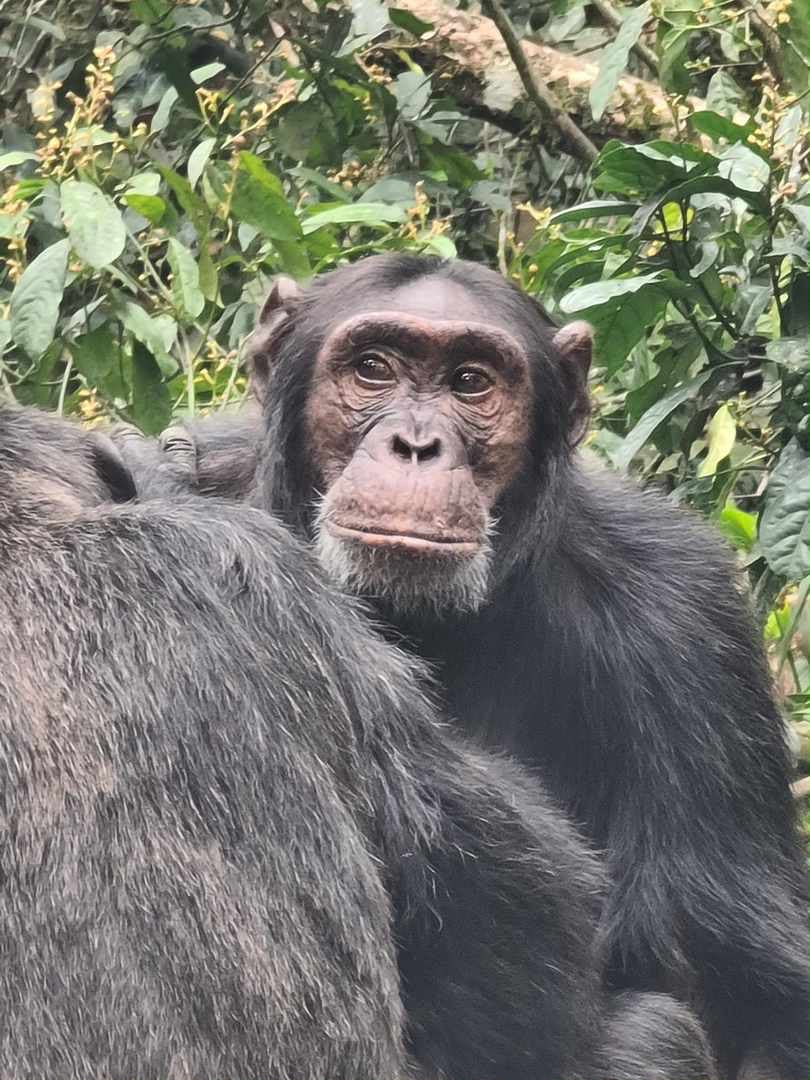
Kibale National Park is where we send the vast majority of our clients for this activity. It holds over a thousand individual chimpanzees across several fully habituated communities, and treks are generally a moderate 2–4 hour forest walk culminating in an hour with the chimps. The community-run Bigodi Wetland Sanctuary nearby makes an excellent, inexpensive add-on walk for birds and monkeys, with proceeds going directly to the local community.
Chimp Tracking Practicalities
- Minimum age is typically 12 — confirm with your operator, as this can vary slightly by site
- Morning sessions (around 6:00–7:00 AM) are more popular — chimps tend to be more active and the light is better for photography
- Book 6–8 weeks ahead for peak season — less urgent than gorilla permits, but Kibale morning slots do sell out
- The chimpanzee habituation experience (a full day, 6:00 AM to 6:00 PM, alongside researchers and trackers) is available at Kibale for a more immersive, behind-the-scenes conservation experience
Combining Chimps and Gorillas
Kibale sits conveniently close to Queen Elizabeth National Park, which in turn connects naturally to Bwindi — making a combined “primates and predators” loop entirely realistic in 7–10 days. Our 7-day Gorillas, Chimpanzees and Wildlife Tour is our most-booked itinerary for exactly this reason, and our 5-day Gorillas, Chimpanzees and Wildlife Safari compresses the same combination into a shorter window. See our full itinerary section below for the day-by-day breakdown of both.
National Parks Guide
Uganda has ten national parks plus several dedicated wildlife reserves, all managed by the Uganda Wildlife Authority (UWA), and each has a genuinely distinct personality rather than blurring into the next. Here is the full rundown, followed by two comparison tables to help you choose.
Quick Comparison: Which Park For What
| Park | Best For | Best Time | Distance from Entebbe |
|---|---|---|---|
| Bwindi Impenetrable | Gorilla trekking | Jun–Sep, Dec–Feb (or Apr/May/Nov for discount permits) | ~8–9 hrs road / ~1 hr flight |
| Mgahinga Gorilla | Gorillas, golden monkeys, volcano hikes | Jun–Sep, Dec–Feb | ~9 hrs road / ~1 hr flight |
| Queen Elizabeth | Big game, tree-climbing lions, boat cruise | Year-round | ~5–6 hrs road / ~1 hr flight |
| Murchison Falls | Big game, Nile boat cruise, waterfall | Year-round | ~4–5 hrs road / ~45 min flight |
| Kibale | Chimpanzee tracking | Year-round (Jun–Sep, Dec–Feb easiest) | ~4–5 hrs road / ~1 hr flight |
| Lake Mburo | Zebra, walking safaris, budget stopover | Year-round | ~3–3.5 hrs road |
| Kidepo Valley | Remote wilderness, cheetah, culture, rhino story | Sep–Mar (dry) | ~1 hr flight (10+ hrs road) |
| Semuliki | Rainforest, hot springs, rare species | Dry seasons | ~5–6 hrs road |
| Rwenzori Mountains | Multi-day trekking | Jun–Aug, Dec–Feb | ~7–8 hrs road |
| Mount Elgon | Sipi Falls, hiking, caves | Jun–Aug, Dec–Feb | ~4–5 hrs road |
Best Parks by Wildlife
| Wildlife | Best Park(s) |
|---|---|
| Mountain gorillas | Bwindi Impenetrable, Mgahinga Gorilla |
| Chimpanzees | Kibale (best odds), Kyambura Gorge, Budongo Forest |
| Golden monkeys | Mgahinga Gorilla |
| Tree-climbing lions | Ishasha sector, Queen Elizabeth NP |
| Elephants | Murchison Falls, Queen Elizabeth |
| Rhino | Ziwa Rhino Sanctuary (established); Kidepo Valley (emerging — see below) |
| Zebra | Lake Mburo (Uganda’s only park with zebra) |
| Hippo & crocodile | Kazinga Channel, Queen Elizabeth NP |
| Cheetah & ostrich | Kidepo Valley (the only park with either) |
| Shoebill stork | Mabamba Swamp (near Entebbe), Murchison Falls delta |
Bwindi Impenetrable National Park
A UNESCO World Heritage Site and one of Africa’s oldest rainforests, home to roughly half the world’s remaining wild mountain gorillas across four trekking sectors. Also outstanding for birding, with over 350 species. See our dedicated Gorilla Trekking Planning Guide above.
Mgahinga Gorilla National Park
Uganda’s smallest national park, sitting within the volcanic Virunga range shared with Rwanda and the DRC. One habituated gorilla family, plus golden monkey trekking and hikes up three extinct volcanoes — Muhavura, Gahinga and Sabinyo.

Queen Elizabeth National Park
Uganda’s most biodiverse savannah park — roughly 95 mammal species and 600 bird species across open savannah, crater lakes, wetlands and the Kazinga Channel, one of Africa’s densest hippo populations. The Ishasha sector is famous for tree-climbing lions, and Kyambura Gorge adds chimpanzee tracking.
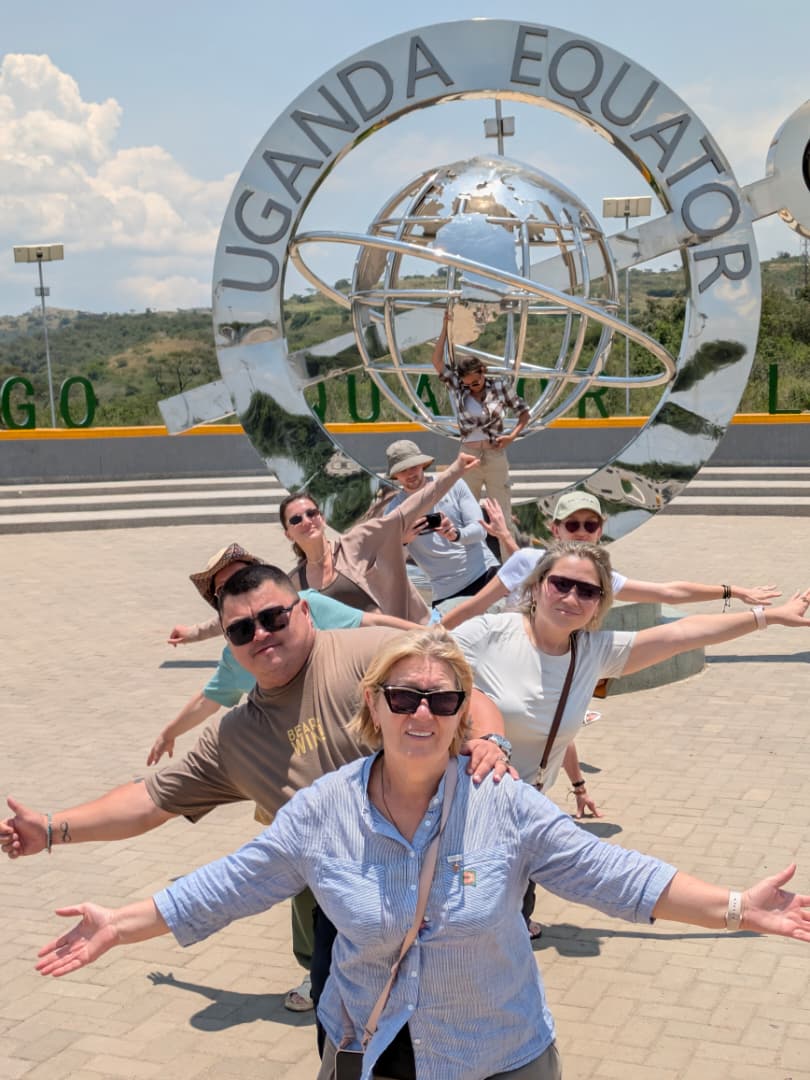
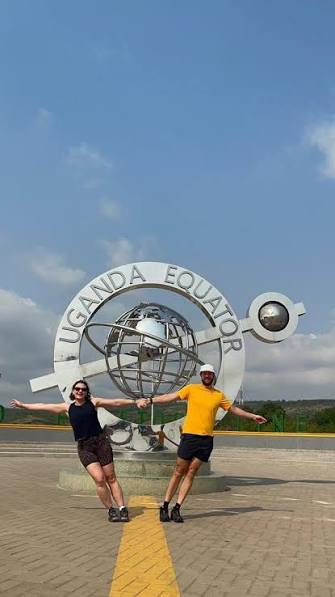
Murchison Falls National Park
Uganda’s largest national park, named for the point where the entire Victoria Nile forces itself through a gorge barely seven metres wide before dropping into the plains below. Game drives turn up elephant, giraffe, buffalo, lion and enormous Nile crocodiles, and the boat cruise to the base of the falls is a classic Uganda experience. Budongo Forest on the park’s southern edge adds chimpanzee tracking.
Kibale National Park
The undisputed chimpanzee tracking capital of East Africa, with 13 primate species in one forest. Sits near the pleasant town of Fort Portal and pairs naturally with Queen Elizabeth National Park. See our Chimpanzee Trekking Guide above.
Lake Mburo National Park
Uganda’s smallest savannah park and the closest to Kampala, at roughly 3.5 hours. The only park in Uganda where you will reliably see zebra and impala, and because predator numbers are low, one of the few East African parks where walking safaris, night game drives and horseback safaris are all permitted — a genuinely great budget-friendly stop for travellers short on time.
Kidepo Valley National Park
Consistently rated by experienced guides as one of Africa’s most spectacular yet least-visited parks. Tucked into Uganda’s remote northeast against the South Sudan and Kenya borders, Kidepo delivers dramatic mountain-backed savannah, the only cheetahs and ostriches found in any Ugandan park, and deep cultural exposure to the pastoralist Karamojong people.
A genuinely exciting update: in March 2026, the Uganda Wildlife Authority began translocating southern white rhinos into a newly secured sanctuary within Kidepo’s Narus Valley — the first rhinos in the park since the last individual was killed by poachers in 1983. Once established, Kidepo is on track to become Uganda’s first true Big Five national park. As of 2026, the rhinos remain in a protected acclimatisation phase, closely monitored before any wider release, so sightings are not yet guaranteed on a predictable basis — Ziwa Rhino Sanctuary (below) remains the reliable option today, with Kidepo one to watch over the next few years.
Semuliki National Park
A genuine extension of the Congo Basin lowland rainforest, with hot springs at Sempaya and bird and mammal species found nowhere else in East Africa. Lightly visited, which is part of the appeal for travellers who have already done the classic circuit.
Rwenzori Mountains National Park
A UNESCO World Heritage Site nicknamed the “Mountains of the Moon,” home to Africa’s third-highest peak, Margherita Peak (5,109m), and retreating equatorial glaciers. A serious multi-day trekking destination rather than a drive-through safari park.
Mount Elgon National Park
An enormous extinct volcano straddling the Uganda–Kenya border, home to one of the world’s largest intact calderas. Most visitors come for Sipi Falls — three waterfalls near the park’s edge — or multi-day hikes up the mountain itself.
Ziwa Rhino Sanctuary
Not a national park but a dedicated breeding and protection reserve roughly 2–3 hours from Kampala en route to Murchison Falls. For over four decades this has been the only place in Uganda to see a rhino, and you can track southern white rhinos on foot with an armed ranger — still the most reliable rhino experience in the country while Kidepo’s population re-establishes itself.
Planning which combination of parks fits your timeframe is genuinely the hardest part of building a Uganda itinerary — see our suggested itineraries further down, or browse our full range of Uganda safari packages for ready-built combinations we can tailor to your dates.
Choosing the Right Safari
With ten national parks, multiple comfort tiers and a dozen possible add-on activities, the hardest part of planning is often simply deciding what kind of trip you actually want. Work through these questions in order.
1. Is gorilla trekking a must-do, a nice-to-have, or not a priority? If it is a must-do, your minimum trip length is 3 days (using flights) and your budget must include the $800 permit. If it is a nice-to-have, you have far more flexibility on route and length. If it is not a priority, an entirely different itinerary opens up — built around Murchison Falls, Queen Elizabeth and Kidepo instead.
2. How much time do you actually have? 3–5 days realistically allows one primate experience plus a short game-viewing add-on. 7–10 days allows gorillas, chimps and genuine Big Five game viewing. 14+ days allows the full circuit, including remote Kidepo Valley.
3. What is your comfort priority — cost, convenience, or exclusivity? Cost-focused travellers should read our budget safari guidance. Convenience-focused travellers should weigh domestic flights against road transfers. Exclusivity-focused travellers should look at fly-in circuits and the gorilla habituation experience.
4. Who is travelling? Jump to the traveller-type guide that matches your trip: Family, Solo, Honeymoon, Senior, or Student and Backpacker.
5. Is there a specific special interest driving the trip? If birding or photography is the primary motivation rather than a general wildlife interest, see our dedicated Birding and Photography planning guides — the pacing and site selection genuinely differ from a standard itinerary.
Once you have answers to the above, our suggested itineraries further down will have a starting point close to what you are picturing — or get in touch and we will build it from scratch around your answers.
Family Safari Planning
Uganda works well as a family safari destination, with a few practical age considerations to plan around.
- Gorilla trekking has a strict minimum age of 15, and chimp tracking is typically 12+ — families with younger children will want to build a trip around other activities rather than primates.
- Lake Mburo National Park is genuinely excellent for families — short drives, and walking and biking safaris that are easy and safe with kids, plus zebras that reliably delight younger children.
- The Kazinga Channel boat cruise in Queen Elizabeth National Park is a low-effort way for kids to see large amounts of wildlife without a long game drive.
- Entebbe, right by the airport, has the Uganda Wildlife Education Centre and Botanical Gardens — both good, low-key options for younger children or as an arrival/departure-day activity.
- Practical tips: book a private vehicle and guide rather than shared drives, keep individual driving days shorter than you would for an adults-only trip, confirm malaria prevention options suitable for your children’s ages with your doctor well in advance, and choose family-friendly lodges with interconnecting or family rooms.
Solo Traveller Guide
Uganda is a genuinely manageable, welcoming destination for solo travel, and gorilla trekking in particular lends itself well to it — you are placed into a group of up to eight trekkers regardless of whether you booked solo or with a partner, making the activity inherently social.
- Ask about joining scheduled group departures rather than booking a fully private vehicle — this reduces cost by avoiding a single-traveller supplement, and puts you around other travellers for the trip.
- Share your itinerary with someone at home and check in periodically, as you would for solo travel anywhere.
- Book through a licensed local operator rather than freelancing the logistics — this matters more for solo travellers than groups, since you do not have travel companions to problem-solve with if something goes sideways.
- Lodges and camps are naturally social spaces — communal dining areas and shared game drives mean solo travellers rarely feel isolated on a Uganda safari.
- Avoid walking alone after dark in towns and cities, and use vetted transport rather than hailing random vehicles.
Honeymoon Safari Planning
A Uganda trip built for two has a natural romantic arc: gorilla trekking as a genuinely shared bucket-list moment, quiet lodges with private verandas overlooking forest or crater lake, and sundowners on the Kazinga Channel as the light turns gold over the water. It is also, increasingly, where couples choose to get engaged.
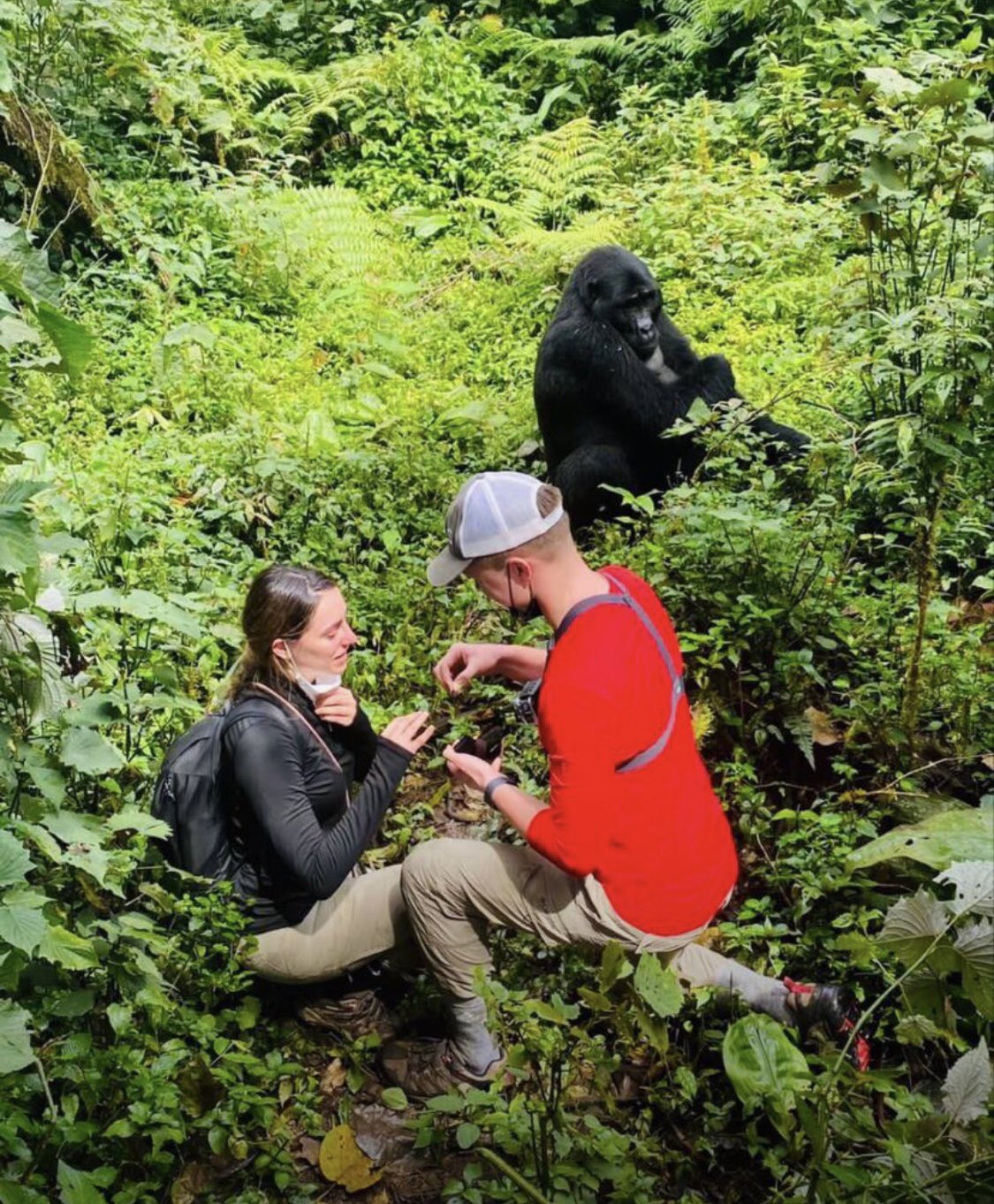
Ideas that work particularly well for honeymoon itineraries:
- Private, fly-in circuits that minimise long road transfers between activities
- A soak in the natural hot springs at Semuliki National Park
- Boutique lodges near Bwindi with couples-only dining and spa options
- Combining Uganda with a short Rwanda or Zanzibar extension using the East African Tourist Visa — see our Rwanda Extension Guide and Tanzania Extension Guide below
Let us know it is a honeymoon (or a proposal in the works) when you reach out — we flag it to our lodge partners, who often arrange small touches such as room upgrades or private dinners for couples on request. Our 6-Day Eternal Love Honeymoon Safari is built specifically around this kind of trip.
Senior Traveller Guide
Uganda safaris are genuinely accessible to older travellers, provided a few things are planned for rather than assumed.
- There is no upper age limit for gorilla or chimpanzee trekking, only the fitness to manage uneven, sometimes steep terrain for a few hours. If mobility is a concern, mention it when booking — some Bwindi sectors are considerably gentler than others, and sedan chairs (a padded seat carried by a team of porters) are available for travellers who want the gorilla experience but cannot manage the trek unassisted.
- Hire a porter regardless of fitness level. For $15–20, a porter carries your bag and physically assists you across difficult sections — genuinely useful rather than an indulgence.
- Favour road-based itineraries with shorter daily drives, or use domestic flights to cut a potential 9-hour transfer to Bwindi down to about an hour.
- Choose lodges with easier terrain to reach rooms — this varies significantly by property, and we can confirm accessibility specifics before you book.
- Build in rest days between demanding activities rather than stacking trekking days back to back.
- Confirm your travel insurance covers your age bracket for medical evacuation — some policies have age-related caps or premium increases worth knowing about in advance.
Student and Backpacker Guide
Uganda is one of the most genuinely affordable serious safari destinations in East Africa, and a well-planned backpacker trip does not mean a compromised one.
- Travel in low season (April, May, November) for the discounted $600 gorilla permit and reduced lodge rates throughout.
- Join scheduled small-group departures rather than booking a fully private vehicle — the single biggest lever for reducing per-person cost.
- Base a budget itinerary around Lake Mburo National Park, which is close to Kampala, has no separate big-game permit fee, and includes walking safaris in standard park entry.
- Consider Ziwa Rhino Sanctuary instead of a full northern Big Five circuit if rhino sightings matter but a Kidepo detour does not fit the budget.
- Public buses and shared minibus “matatus” are the cheapest way to move between towns, though they are not realistic for a proper multi-park safari circuit where timing and park access matter.
- The gorilla permit itself is the one cost that will not flex regardless of how frugally you travel — budget for it as a fixed line item, and trim everything else around it.
- A realistic budget trip, excluding the gorilla permit, can run as low as 100–200 per person per day — see our full Uganda Safari Budget Planner above.
Birding Safari Planning
Uganda is, without much competition, one of the best birding destinations on the planet — over 1,000 recorded species, more than 11% of the world’s total, packed into a country roughly the size of Great Britain.
- The headline species is the shoebill stork — a genuinely prehistoric-looking bird over a metre tall, found in Uganda’s papyrus swamps. Mabamba Swamp, a short boat trip from Entebbe, is the most reliable spot and an easy add-on at the start or end of a trip.
- Best birding locations: Mabamba Swamp (shoebill), Queen Elizabeth National Park and the Kazinga Channel (waterbirds and raptors), Bwindi and Semuliki (Albertine Rift and Congo Basin endemics), and Lake Mburo (dry-country species seen nowhere else in Uganda).
- Best time to visit for birding leans toward the wet seasons — March–May and October–November — when migrant species are present and resident birds are in full breeding plumage.
- A dedicated birding itinerary is genuinely different from a standard game-drive schedule. Pacing is slower, timing is built around dawn activity, and site selection prioritises habitat diversity over big-game density. If birds are your primary reason for travelling, tell us at the planning stage rather than trying to fit birding around a general wildlife schedule.
Photography Safari Planning
Uganda rewards photographers who come prepared, both technically and in terms of expectations — the light, wildlife density and proximity you get with primates specifically are hard to replicate elsewhere.
Gear guidance:
- A telephoto zoom (100–400mm equivalent is a good general-purpose range) for game drives and birding
- A wider lens for landscapes and environmental portraits
- A rain cover or dry bag for gorilla trekking days — Bwindi is a rainforest, and sudden showers are normal
- Extra batteries and a power bank — cold, humid conditions and limited charging at remote lodges both drain batteries faster than expected
- No flash photography is permitted around gorillas or chimps — plan your settings (higher ISO, wider aperture) for low-light forest conditions in advance
Best photographic subjects: tree-climbing lions draped over fig branches in Ishasha, the shoebill stork at Mabamba Swamp, mountain gorillas in Bwindi’s atmospheric forest light, the raw power of Murchison Falls, and golden-hour game drives in Queen Elizabeth and Murchison Falls National Parks.
If photography is your primary focus, tell us when planning — we build in extra time at key sightings, prioritise sectors and times of day suited to better light, and avoid the rushed, checklist-style pacing a generic package might default to.
Uganda Visa Guide
As of 2026, Uganda operates a fully online e-Visa system — there is no visa-on-arrival option, so this must be sorted before you fly, not at the airport.
| Visa type | Cost | Validity | Notes |
|---|---|---|---|
| Single-entry tourist e-Visa | 50+ 1.50 admin fee | Up to 90 days | The standard choice for most visitors |
| East African Tourist Visa (EATV) | $100 | 90 days, multiple entry | Covers Uganda, Kenya and Rwanda on one visa — apply through whichever of the three you enter first |
| Multiple-entry visa | $100 (6–12 months) / $200 (24 months) | 6–24 months | For frequent visitors |
| Transit visa | $50 | 7 days, non-extendable | For travellers passing through Uganda to a third country |
How to apply: through the official portal only — visas.immigration.go.ug. Fraudulent third-party visa websites exist and have been known to charge 110–200 for a visa that officially costs $50; stick to the official government portal or have your operator assist directly.
What you will need to apply:
- A clear scan of your passport’s bio-data page
- A recent passport-style photo
- Your yellow fever vaccination certificate
- A detailed travel itinerary
- Proof of return or onward flights
- Proof of accommodation
Processing time is typically 2–3 business days, though we recommend applying at least 10 days before travel to allow buffer time. Once approved, print your approval letter — you will present it at the border for biometric processing (fingerprints and a photo) on arrival.
Visa-exempt travellers: citizens of East African Community member states (Kenya, Tanzania, Rwanda, Burundi, South Sudan, DRC) do not need a visa for tourism visits.
Planning a multi-country trip? The East African Tourist Visa is the smart choice if your itinerary includes two or more of Uganda, Kenya and Rwanda. One important rule: you must apply through the country you enter first — if you fly into Entebbe first, apply via Uganda’s portal, not Rwanda’s or Kenya’s. See our full Cross-Border Safaris section below.
Passport Requirements
- Your passport must be valid for at least 6 months beyond your travel dates
- You need at least one blank page for entry processing (some guidance recommends two, to be safe)
- Your passport details must match your e-Visa application exactly — even minor discrepancies can cause delays at the border
- Keep a photocopy or photo of your passport’s bio-data page stored separately from the original, along with a digital copy in cloud storage
- If your passport is lost or stolen in Uganda, contact your embassy or high commission in Kampala immediately, and file a police report — your operator can assist with this process
Yellow Fever Requirements
A yellow fever vaccination certificate is mandatory for entry into Uganda, with narrow exceptions for infants under one year old and travellers with an official medical exemption certificate.
- You will need to upload your certificate as part of your e-Visa application, and it may be checked again on arrival
- Vaccinate at least 10 days before arrival — the certificate is not considered valid until 10 days after the jab
- The certificate is valid for life once issued (a change from the older 10-year renewal rule)
- If you are transiting through or arriving from another yellow-fever-risk country, keep your certificate easily accessible, as it may be checked at multiple points
- This is not optional guidance — travellers without a valid certificate and without an exemption can be denied entry
Vaccinations
None of this is medical advice — confirm your specific requirements with a doctor or travel health clinic 4–6 weeks before departure.
- Yellow fever — mandatory (see above)
- Routine vaccinations should be up to date: MMR, Tdap, and polio boosters where relevant
- Typhoid and Hepatitis A are commonly recommended for East Africa travel
- Hepatitis B and rabies are worth discussing with your travel clinic depending on your itinerary and planned activities
- Cholera vaccination may be recommended depending on your specific itinerary and current conditions — ask your travel clinic
- Bring your vaccination records with you, alongside your yellow fever certificate
Malaria Prevention
Malaria is present countrywide in Uganda, including in and around the national parks.
- Antimalarial prophylaxis is strongly recommended — commonly Malarone (atovaquone-proguanil) or doxycycline. Discuss the right option for you with your doctor, factoring in trip length, other medications, and any medical history.
- Pair medication with practical prevention: insect repellent containing DEET, covering up at dawn and dusk when mosquitoes are most active, and sleeping under a treated mosquito net where provided.
- Know the symptoms — fever, chills, headache and body aches, which can appear as late as several weeks after returning home. Seek medical attention promptly and mention your Uganda travel history to any doctor you see afterwards.
- This is genuinely not an activity where “I’ll take my chances” is a reasonable plan — Uganda’s malaria risk is real and countrywide, not confined to specific regions.
Travel Insurance Guide
Comprehensive travel insurance is not optional advice for a Uganda safari — it is a practical necessity.
What to look for in a policy:
- Medical evacuation coverage, ideally with no low cap — medical facilities outside Kampala are limited, and a serious injury or illness in a remote park may require evacuation to the capital or, in more serious cases, out of the country entirely
- Trip cancellation and interruption cover, including cover for disease-outbreak-related cancellations given the current 2026 health situation (see our Health and Safety Guide below)
- Cover for adventure activities if your itinerary includes white-water rafting, gorilla trekking at altitude, or multi-day trekking in the Rwenzoris — some standard policies exclude these unless specifically added
- Gorilla/chimpanzee permit cancellation cover, given these are non-refundable, high-value fixed costs
- 24/7 emergency assistance line, ideally one that can coordinate directly with providers in East Africa
Read our full Travel Insurance Policy information for how this fits into a booking with us, and see our Cancellation & Refund Policy and Terms and Conditions for the specifics of how permit and booking cancellations are handled on our end.
Health and Safety Guide
Important 2026 Update: Ebola and Marburg Virus Disease
A trustworthy planning guide does not pretend a genuine public health situation is not happening, so here is the honest, current picture as of mid-July 2026.
In May 2026, the World Health Organization declared a Public Health Emergency of International Concern (PHEIC) for an outbreak of Ebola disease caused by Bundibugyo virus, centred in Ituri Province in northeastern Democratic Republic of the Congo. Here is what matters for your trip planning:
- The epicentre is in the DRC, not Uganda, and the DRC situation remains serious: by mid-July 2026, the WHO had recorded over 2,100 confirmed cases and more than 800 deaths there, describing it as one of the largest Ebola outbreaks on record and still spreading.
- Uganda’s own outbreak has been small and appears to be resolving. Uganda recorded 20 confirmed cases and 2 deaths in total (15 linked to travel from the DRC, 5 from local transmission), concentrated in Kampala and neighbouring Wakiso District. No new Ugandan cases had been reported since 21 June 2026, and the country’s last patient was discharged on 16 July 2026 after two clear tests, starting the formal 42-day countdown toward declaring the outbreak over.
- No cases have occurred in any part of Uganda’s tourism circuit. Bwindi, Mgahinga, Queen Elizabeth, Murchison Falls, Kibale and every other park on this page have had zero cases, and national parks and gorilla/chimpanzee trekking have continued operating normally throughout, with rangers following additional infection-prevention protocols.
- A separate, isolated Marburg virus case — a young child in Kyegegwa District, western Uganda, who sadly died — was identified in late June 2026 during enhanced Ebola surveillance. No further cases or symptomatic contacts had been reported as of the most recent updates we have seen.
- Enhanced screening is standard at entry points. Expect thermal temperature screening and, where currently required, an online health/passenger locator declaration at Entebbe International Airport — this typically adds only a few minutes and does not prevent entry for travellers without symptoms.
- Government travel advisories vary. The US State Department has at times placed Uganda at its highest advisory level (a rating that also folds in crime and unrest factors, not only health), while other governments have taken a more calibrated approach. Because this changes, check your own government’s current advisory close to your departure date rather than relying on any single source, including this page:
- US State Department travel advisory: travel.state.gov
- UK FCDO travel advice: gov.uk/foreign-travel-advice/uganda
- WHO Disease Outbreak News: who.int/emergencies/disease-outbreak-news
- CDC Travelers’ Health: wwwnc.cdc.gov/travel
Our honest recommendation: talk to a local operator actually tracking the situation in real time, not headlines from months ago, before you cancel or commit. Book comprehensive travel insurance that includes medical evacuation and outbreak-related cancellation cover (see our Travel Insurance Guide above). If your itinerary would take you near the Uganda–DRC border, including any route that crosses into DRC’s Virunga National Park, avoid it for now — movement across that specific border has been restricted. For the fullest breakdown of this situation, see the safety update in our Ultimate Uganda Safari Travel Guide, which we keep updated as the situation develops. If you would like a live, honest read on current conditions for your specific travel dates, message our team on WhatsApp — as a Kampala-based operator, we are following this day to day.
Everyday Health Precautions
- Do not drink tap water. Stick to bottled or properly treated/filtered water throughout your trip, including for brushing teeth — standard practice across most of East Africa, not a Uganda-specific concern. Most lodges provide bottled or filtered water as standard.
- Schistosomiasis (bilharzia) is present in some freshwater lakes, including parts of Lake Victoria. Avoid swimming in untreated fresh water where local guidance advises against it, and ask your lodge or guide before swimming anywhere.
- Altitude is worth planning around if you are trekking in the Rwenzori Mountains or hiking Mgahinga’s volcanoes — ascend gradually, stay hydrated, and know the symptoms of altitude sickness.
- The gorilla trekking health rule deserves repeating here: you will not be allowed to trek if you are showing symptoms of a cold, flu or other contagious illness. This is not bureaucratic caution — mountain gorillas are critically endangered and highly vulnerable to human respiratory diseases, and a single unwell visitor can put an entire family at risk.
- Medical facilities outside Kampala are limited. This is precisely why the medical evacuation cover in your travel insurance matters more here than it might for a European city break.
Uganda Safety Guide
The short version: Uganda’s established safari circuit — the parks, lodges and roads tourists actually use — has a long, strong safety record, and the vast majority of visitors travel without incident. Most safety issues involve opportunistic petty crime in urban areas rather than anything directed at tourists, and the parks themselves are professionally managed with rangers, briefings and clear rules.
Everyday Safety Basics
- Road safety is the single biggest real risk for visitors. Ugandan roads mix fast traffic, motorbikes (boda-bodas), pedestrians and livestock, and driving standards vary considerably. This is precisely why a licensed operator with a professional driver-guide is worth prioritising — see our Self-Drive vs Guided Safaris comparison below.
- Kampala requires normal city vigilance. Keep valuables out of sight, use hotel safes, avoid walking alone late at night, and use a trusted driver rather than hailing random taxis.
- The national parks are well managed and secure, with ranger escorts for gorilla and chimp trekking serving both wildlife-tracking and security purposes.
- Boda-bodas (motorbike taxis) are everywhere and useful for short hops in towns, but carry a meaningfully higher accident risk. Many governments’ travel advisories specifically caution against their use, particularly after dark, and we would echo that caution.
- Political demonstrations can occur, particularly around election periods — Uganda held elections in January 2026. Avoid large public gatherings and protests as a matter of routine caution, as you would anywhere.
- Uganda’s Anti-Homosexuality Act (2023) criminalises same-sex relations and remains in force. LGBTQ+ travellers should be aware of this legal context and research current guidance from their embassy before travel.
- Watch for visa scams. Only apply for your e-Visa through the official portal, visas.immigration.go.ug — fraudulent third-party sites have been known to charge 110–200 for a visa that officially costs $50.
- Wildlife safety rules exist for a reason. Keep your distance from all wild animals, never exit a vehicle in a park unless a guide explicitly confirms it is safe, and follow ranger instructions during gorilla and chimp treks without exception.
Useful Numbers to Save Before You Travel
- Uganda Police emergency: 999 or 112
- Your operator’s WhatsApp/phone number (for us: +256 709 713 075)
- Your embassy or high commission’s Kampala contact number
- Your travel insurance’s 24-hour emergency assistance line
Check current guidance from your own government’s foreign travel advisory close to your departure date rather than relying on any single source — situations, including the health update above, can change between when this page was written and when you travel.
Money and Currency Guide
Uganda’s currency is the Ugandan Shilling (UGX). As of mid-2026, the exchange rate sits at roughly UGX 3,700 to USD 1, though like any currency this fluctuates — check a live rate shortly before you travel rather than relying on any fixed figure, including this one.
- US dollars are widely accepted for larger expenses — gorilla and chimpanzee permits, lodge bills and tour packages are typically quoted and paid in USD. Bring newer bills (post-2009 series) in good condition; older or damaged notes are frequently refused or exchanged at a worse rate.
- Carry Ugandan shillings for smaller, everyday purchases — markets, tips, drinks and roadside stops. You can withdraw shillings from ATMs or exchange cash on arrival.
- Exchange bureaus in Kampala and Entebbe generally offer better rates than hotels, though hotel exchange is more convenient if you need cash quickly after arrival.
Tipping Guide
Tipping is customary and genuinely appreciated in Uganda, though not legally mandatory.
| Role | Suggested amount |
|---|---|
| Safari driver-guide | $10–20 per day |
| Dedicated trekking guide | $10–15 per day |
| Gorilla/chimpanzee trekking porter | $15–20 per trek |
| Lodge staff (housekeeping, waiters) | $5–10 per day, or a discretionary amount left at checkout |
| Local guides for cultural walks (e.g. Batwa) | $5–10 per group, discretionary |
Adjust based on group size, trip length and service quality, and check whether your tour price already includes any of this before tipping twice. Carry small-denomination US dollars or Ugandan shillings specifically for this purpose, since drivers and porters cannot always break large notes.
Mobile Money
Mobile money (MTN MoMo and Airtel Money) is how most everyday transactions happen in Uganda, from paying for a boda-boda ride to splitting a market bill. For visitors, it becomes genuinely useful once you have a local SIM registered — see the SIM Cards section below — and is more relevant for longer stays than for a standard week-long safari, where cash and card cover almost everything you will need.
Credit Cards
- Credit cards are accepted at upscale lodges and hotels, generally with a surcharge, often 3–5%
- Do not rely on card payments for smaller vendors, local restaurants or markets — cash is standard outside the higher end of the tourism sector
- Visa is the most widely accepted network, with Mastercard close behind; American Express acceptance is limited
- Notify your bank of your travel dates before departure to avoid transactions being flagged or blocked
ATMs
- ATMs are reliable in Kampala, Entebbe and larger towns, dispensing Ugandan shillings
- They are far less reliable — or entirely absent — once you are deep in park territory, so withdraw what you will need before heading into remote areas
- Withdrawal limits per transaction are often lower than travellers expect (commonly UGX 1,000,000–2,000,000 per withdrawal, depending on the bank), so budget for multiple withdrawals or bring some cash as backup
- Standard bank card is usually more useful to bring than a specialist travel card, since ATM foreign transaction fees vary more by your home bank than by the Ugandan ATM itself
Internet and Wi-Fi
Staying connected in Uganda is easier than most first-time visitors expect, even inside the national parks.
- 4G coverage is genuinely solid in towns, cities and most tourist areas, including inside several national parks
- Most lodges — even remote ones — offer at least basic Wi-Fi, though speed and reliability vary considerably by property
- Do not expect strong signal deep in dense forest sectors during gorilla treks — this is normal and part of the experience, not a fault with your device
- 5G exists but is limited to select urban zones, mainly Kampala
SIM Cards
- The two main networks are MTN and Airtel, both with booths at Entebbe International Airport where you can buy and register a SIM within minutes of landing
- A local SIM is cheap — typically around UGX 2,000–5,000 for the SIM itself, plus affordable data bundles — but requires passport registration on the spot, a process that generally takes 20–40 minutes
- MTN generally has the widest coverage, including in remote areas like Bwindi, Murchison Falls and Kidepo Valley, while Airtel offers strong value and competitive bundles
- eSIMs (Airalo, Holafly and similar providers) are a convenient no-registration alternative, typically running around $21 for 5GB or $35 for 10GB — noticeably pricier than a local physical SIM, but worth it if you would rather skip the airport registration process
Electricity and Power Plugs
- Uganda uses UK-style Type G plugs (three rectangular pins), running at 240V, 50Hz
- Bring a universal adapter if your devices use a different plug shape — this is the single most commonly forgotten item on a Uganda packing list
- Power can be intermittent at remote lodges, some of which rely partly or fully on generators or solar power with set charging hours — bring a portable power bank as backup, particularly for camera batteries
- Most modern electronics (phones, cameras, laptops) handle 240V without issue, but check the voltage rating on any older device before plugging in
Local Customs and Etiquette
- Greetings matter. Take the time to greet people properly before launching into a request or question — a warm “how are you” goes a long way in Uganda’s generally warm, relational culture.
- Ask before photographing people. This applies everywhere, but especially in villages and markets — a smile and a gesture toward your camera is usually enough to ask.
- Dress modestly outside of lodges and safari settings, particularly in rural areas and when visiting cultural sites — shoulders and knees covered is a safe general rule for both men and women.
- Use your right hand (or both hands) when giving or receiving items, including money and food — a small gesture that is noticed and appreciated.
- Public displays of affection are generally more reserved than in much of Europe or North America — keep this in mind particularly outside tourist areas.
- Tipping and small gestures of respect toward guides, porters and lodge staff go a long way beyond the money itself — a genuine “thank you,” ideally with some effort at a local greeting, is always well received.
- Remove your shoes when entering someone’s home, if invited, unless told otherwise.
Languages Spoken
- English is Uganda’s official language and is widely spoken, especially in tourism, making it an easy destination for English-speaking travellers — you will not need any other language to travel comfortably.
- Swahili holds co-official status alongside English, used more in specific contexts such as security services, though it is less universally spoken day-to-day than English.
- Luganda is the most widely spoken local language, particularly in and around Kampala and the central Buganda region.
- Dozens of other regional languages are spoken across Uganda’s more than 50 ethnic groups, including Runyankole, Rukiga, Ateso and Karamojong, reflecting the country’s genuine cultural depth.
- A few words of greeting in the local language of whichever region you are visiting — your driver-guide can teach you a handful — are always warmly received, even though English will get you everywhere you need to go.
Food and Drinks
Ugandan food does not get the international attention of, say, Ethiopian or Moroccan cuisine, but it is hearty, fresh and worth exploring beyond your lodge’s dinner menu.
Staples: matoke (steamed and mashed green banana, arguably Uganda’s national dish), posho (a maize-based staple similar to polenta), rice, beans, groundnut sauce, sweet potato and cassava.
Proteins: freshwater fish — particularly Nile perch and tilapia from Lake Victoria — alongside chicken, goat and beef. Look out for luwombo, a traditional dish of meat or vegetables in groundnut sauce, steamed slowly inside banana leaves.
Street food: the rolex — a chapati rolled around a fried egg omelette, often with vegetables — is Uganda’s iconic street food, especially around Kampala. The name is a cheerful mispronunciation of “rolled eggs,” unrelated to the watch brand.
Fresh produce: Uganda’s tropical climate produces excellent, cheap and abundant fruit — pineapple, passion fruit, jackfruit and mango among them.
Drinks: Ugandan coffee, grown at altitude in the west and southwest, is genuinely excellent and increasingly recognised on the international specialty coffee scene. Also try Ugandan tea, local lagers such as Nile Special and Bell, and waragi, a locally distilled gin.
Practical dining notes: most safari lodges serve a blend of international and local dishes, and dietary requirements — vegetarian, vegan, allergies — are generally well accommodated with advance notice, so flag this when you book. Stick to bottled or treated water, and be moderately cautious with street food if you have a sensitive stomach, though for many travellers comfortable with it, it is a genuine highlight.
What to Wear
Beyond the general packing list above, a few specific dress considerations are worth understanding.
- Neutral, earth-toned clothing is the safari standard — khaki, olive, brown and grey blend into the environment and do not spook wildlife the way bright colours can.
- Avoid white, which shows dirt immediately and stands out in the field.
- Avoid dark blue and black specifically in savannah parks — both colours are known to attract tsetse flies, whose bite is genuinely unpleasant.
- Layer for temperature swings — a cool, misty Bwindi morning and a hot Murchison Falls afternoon can happen within the same week; see our full Uganda Weather by Month breakdown above.
- Cover shoulders and knees at cultural sites and in rural communities, even though lodges and vehicles are far more relaxed about dress code.
- Comfortable, broken-in footwear matters more than fashion for anything involving walking — new boots on trek day is a genuinely common and avoidable mistake.
Safari Vehicles Explained
The right vehicle shapes your entire safari experience — visibility, comfort over rough roads, and how close you can get to a sighting all depend on it.
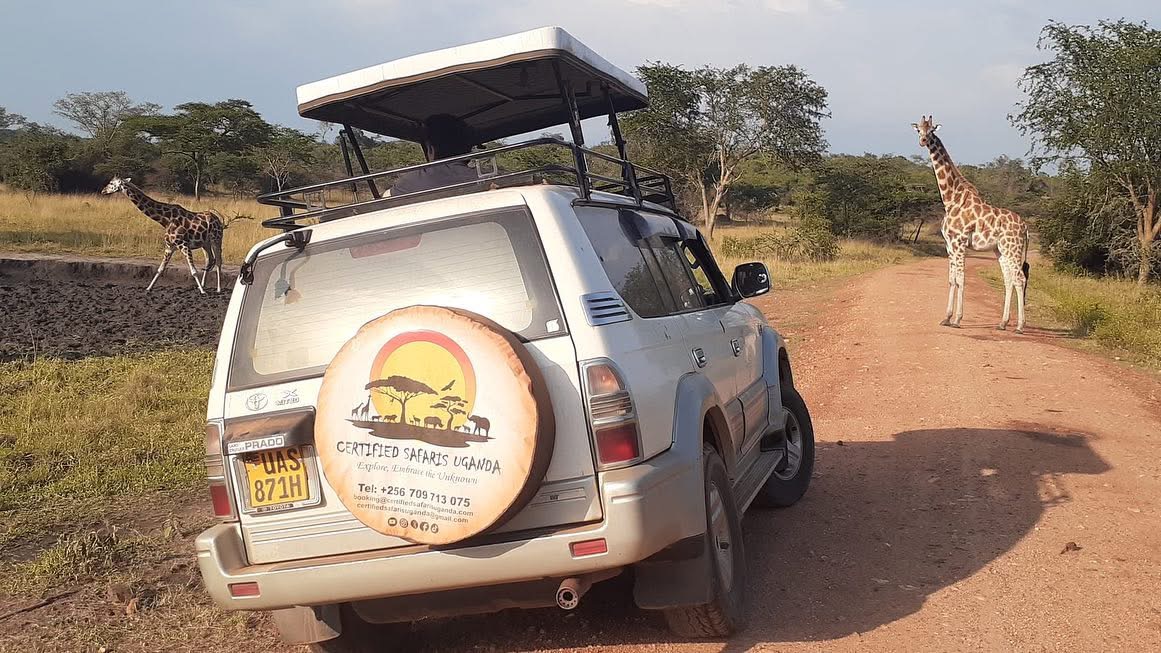
Safari Vehicle Types Compared
| Vehicle type | Best for | Pros | Considerations |
|---|---|---|---|
| 4×4 Land Cruiser / Land Rover with pop-up roof | Standard park game drives and road transfers | Handles rough, unpaved park roads; pop-up roof gives standing photography space | Standard choice for almost every itinerary we run |
| Safari minivan (4×4) | Small groups, budget-tier trips | Lower cost per person for groups | Less capable on the roughest tracks than a full 4×4 |
| Private car with driver | Kampala/Entebbe transfers only | Comfortable for tarmac roads | Not suitable for park interiors |
| Self-drive rental 4×4 | Confident, experienced self-drive travellers | Full independence and flexibility | Requires an international driving permit and comfort with left-hand-side driving on variable road surfaces |
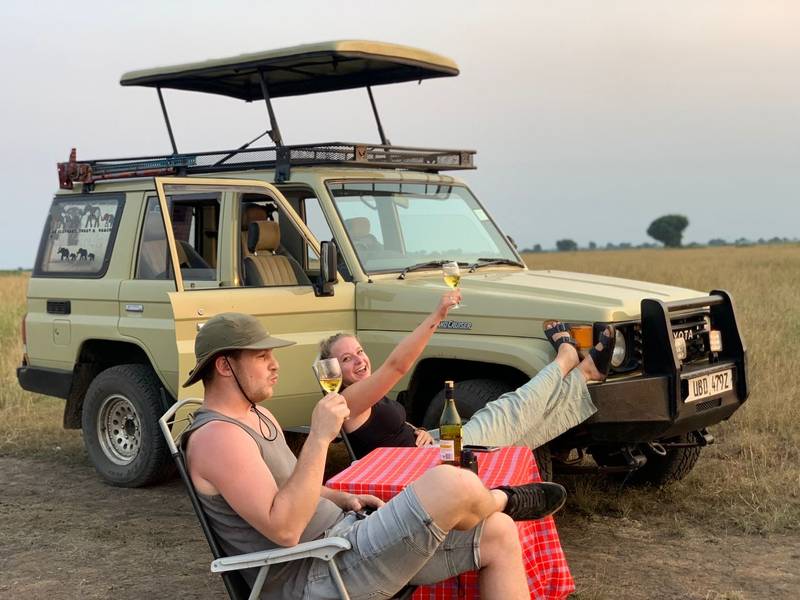
A private vehicle with driver-guide is how the large majority of our clients — and every trip we arrange as standard — get around. A good driver-guide is not just transport; they are your wildlife spotter, cultural interpreter and safety net rolled into one, which is exactly why we build it into every package rather than treating it as an add-on.
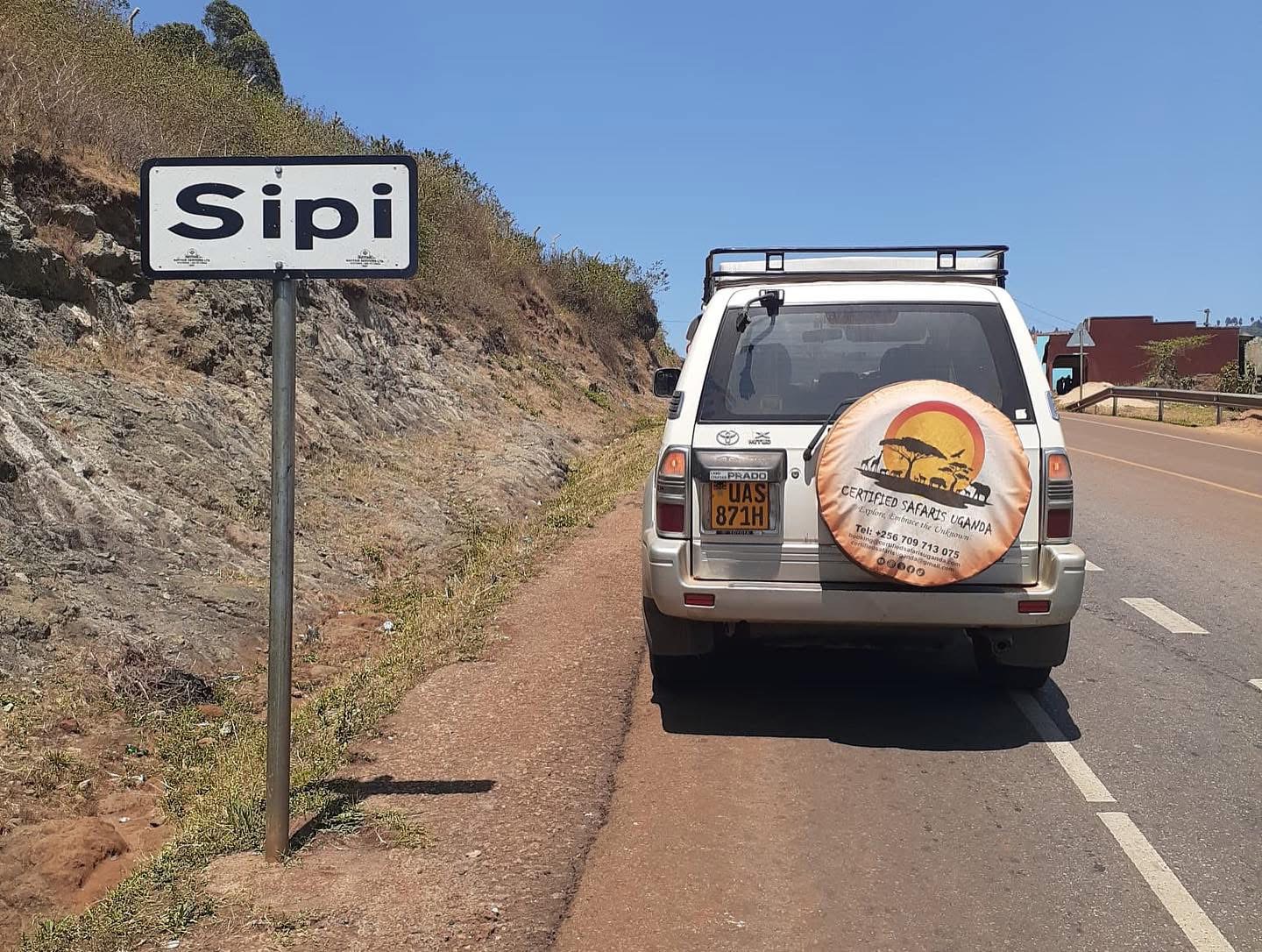
Domestic Flights
Scheduled light-aircraft carriers connect Entebbe to airstrips near most major parks — Bwindi, Kihihi (Queen Elizabeth), Murchison Falls, and Kidepo Valley among them.
- A flight to Bwindi cuts a potential 9-hour drive down to roughly an hour — genuinely worth the extra cost if your itinerary is tight on time
- Kidepo Valley is realistically a flying destination — the road journey is 10+ hours each way, making a scheduled flight the practical choice for all but the most time-rich itineraries
- Domestic flights typically cost 150–400 per sector, depending on route and aircraft
- Luggage is usually limited to 15kg in a soft-sided bag on light aircraft — check this with your operator before packing if your itinerary includes a flight sector
Road Transfers
- Entebbe/Kampala to Bwindi: roughly 8–9 hours
- Entebbe/Kampala to Queen Elizabeth National Park: roughly 5–6 hours
- Entebbe/Kampala to Murchison Falls National Park: roughly 4–5 hours
- Entebbe/Kampala to Kibale National Park: roughly 4–5 hours
- Entebbe/Kampala to Lake Mburo National Park: roughly 3–3.5 hours
- Entebbe/Kampala to Kidepo Valley National Park: 10+ hours (flying is strongly recommended)
Road transfers between parks (for example, Kibale to Queen Elizabeth, or Queen Elizabeth to Bwindi) are typically 2–4 hours and are often built into the day’s itinerary with wildlife-viewing stops en route, rather than treated as “dead” travel time.
Fly-In vs Road Safari Comparison
| Fly-In Safari | Road Safari | |
|---|---|---|
| Time to Bwindi from Entebbe | ~1 hour | ~8–9 hours |
| Cost | Higher — 150–400 per sector on top of ground costs | Lower — included in vehicle/guide day rate |
| Scenery en route | Aerial views only | Full landscape, roadside village and wildlife-spotting opportunities |
| Best for | Time-constrained trips, Kidepo Valley, luxury itineraries | Standard-length trips where transfer time doubles as sightseeing |
| Luggage limits | Usually 15kg soft-sided bag | No meaningful restriction |
Self-Drive vs Guided Safaris
| Self-Drive | Guided Safari | |
|---|---|---|
| Vehicle | Rented 4×4, driven by you | Provided, driven by a professional driver-guide |
| Requirements | International driving permit, confidence with left-hand-side driving | None beyond booking |
| Wildlife spotting | Entirely on you | An experienced guide dramatically increases sightings |
| Road risk | Higher — variable surfaces, unfamiliar rules, occasional livestock on roads | Managed by an experienced local driver |
| Cost | Lower ground cost, but no guiding expertise included | Included in your day rate |
| Best for | Confident, experienced self-drive travellers comfortable with genuine risk | The large majority of visitors, especially first-timers |
Our honest view: self-driving in Uganda is technically possible with an international driving permit, and we partner with Car Hire Africa for travellers who want their own vehicle, including gorilla permit support alongside the rental. That said, we would only recommend it for confident, experienced travellers — Ugandan roads mix variable surface quality, unpredictable traffic and driving on the left-hand side, which catches out visitors from right-hand-drive countries. For most travellers, particularly first-timers, a driver-guide is worth the cost difference many times over.
Responsible Tourism
Tourism in Uganda is directly tied to conservation funding in a way that is worth understanding, because it genuinely changes how you might think about the cost of your trip.
- Permit fees fund conservation directly. A meaningful share of every gorilla and chimpanzee permit goes toward ranger salaries, anti-poaching patrols, and — through UWA’s community revenue-sharing programme — schools, clinics and infrastructure in villages bordering the parks.
- Choose a licensed, locally rooted operator. Beyond the ethical case, it also means your trip spending is more likely to stay within the Ugandan economy rather than flowing to an overseas booking agent.
- Follow wildlife interaction rules without exception — never touch or feed wild animals, maintain the required distance from gorillas and chimps, do not trek if unwell, and always follow your ranger’s instructions immediately.
Sustainable Tourism
- Bring a reusable water bottle where lodges offer refill stations, and avoid single-use plastics generally
- Stay on marked trails and never litter, even biodegradable waste, since it can still disrupt sensitive forest and wetland ecosystems
- Favour smaller group sizes where offered, and lodges that visibly manage their own water and waste responsibly
- Ask your operator about their environmental practices before booking — fuel use, waste management and water stewardship all vary meaningfully between companies
Conservation
- Mountain gorillas and chimpanzees are endangered, and permit revenue is one of the primary funding mechanisms for their protection — trekking with a licensed operator working only with UWA-permitted guides directly supports this.
- Uganda’s rhino population has grown from near-zero to over 60 individuals at Ziwa Rhino Sanctuary since dedicated conservation efforts began, and the ongoing translocation of rhinos into Kidepo Valley National Park (see our National Parks Guide above) is a direct continuation of that recovery.
- Trekking etiquette exists to protect the animals, not just visitors — the strict one-hour limit, the distance rules, and the ban on trekking while unwell are all conservation measures as much as safety ones.
- Community revenue-sharing connects conservation success directly to the wellbeing of people living alongside the parks, which is precisely why community-based tourism (below) matters as much as the wildlife encounters themselves.
Community Tourism
Uganda’s cultural depth is easy to underestimate if you have come purely for wildlife, but community-based tourism is one of the most rewarding — and most directly beneficial — parts of a well-built itinerary.
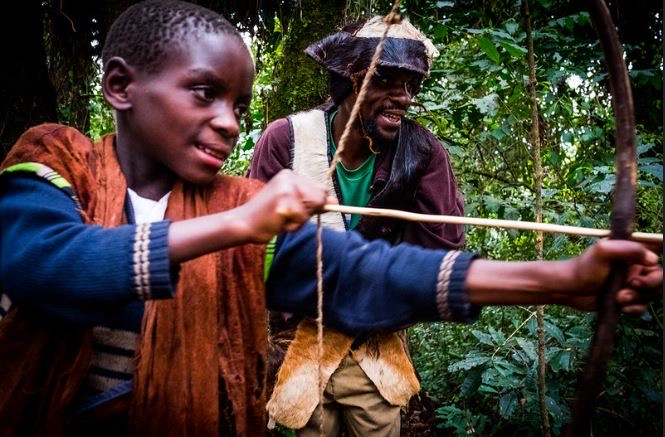
- The Batwa, often called “the Keepers of the Forest,” were traditional forest-dwelling communities around Bwindi and Mgahinga before conservation policy relocated them outside the park boundaries. Batwa-led cultural walks and trails — run by and directly benefiting Batwa communities — are a meaningful way to put tourism revenue directly into the hands of a community with a complicated relationship to the forest that now protects the wildlife it once shared with them.
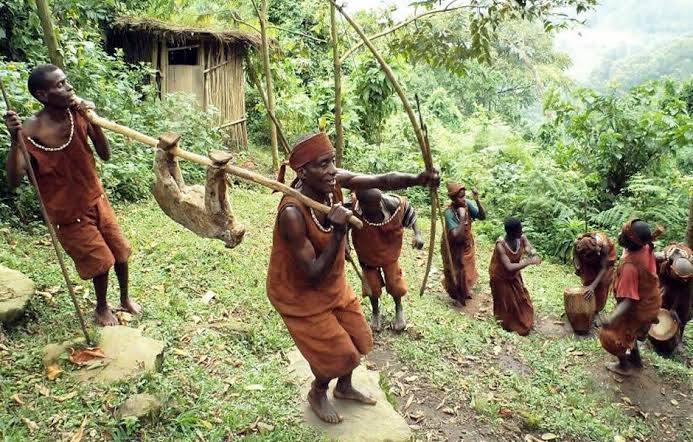
- The Karamojong, semi-nomadic pastoralists in Uganda’s remote northeast around Kidepo Valley, offer a way of life distinct from anywhere else in the country.
- The Buganda Kingdom, Uganda’s largest traditional kingdom, is centred on Kampala — the Kasubi Tombs (a UNESCO World Heritage Site) and the Kabaka’s Palace are worthwhile stops if you have time in the capital.
- The community-run Bigodi Wetland Sanctuary, near Kibale National Park, is a cheaper, community-benefiting alternative or add-on to standard park activities, covering birds and primates alike.
- Local markets and craft villages, found near almost every major park, offer a direct way to support local artisans and take home something more meaningful than an airport souvenir.
Let us know if cultural immersion matters as much to you as the wildlife when you contact our team — we build these experiences in as a genuine, unhurried component of an itinerary, not a rushed 20-minute stop between game drives.
Travel with Children
Beyond the age-specific guidance in our Family Safari Planning section above, a few additional practicalities matter for travelling with children specifically:
- Discuss malaria prevention options suitable for your children’s ages with your doctor well in advance — not every antimalarial is appropriate for young children, and this needs planning ahead of departure, not at the airport.
- Pack a basic paediatric first-aid kit separate from your adult one, including child-appropriate rehydration salts and any regular medication your child needs.
- Confirm family room or interconnecting room availability directly with your operator before booking — this varies significantly by lodge and is easier to arrange with notice.
- Build in downtime. Children generally manage a Uganda itinerary well when it is not stacked as tightly as an adults-only trip — plan shorter driving days and more time at each stop.
- The Uganda Wildlife Education Centre and Botanical Gardens in Entebbe are genuinely good, low-key options for younger children on an arrival or departure day, as mentioned above.
Accessible Travel
Uganda’s safari infrastructure has come a long way, though genuine accessibility varies significantly by property and activity, so planning ahead with your operator matters more here than for many destinations.
- Gorilla trekking with mobility considerations: sedan chairs — a padded seat carried by a team of porters — are available in Bwindi for travellers who want the gorilla experience but cannot manage the trek unassisted. Mention any mobility concerns when booking so we can match you to an appropriate sector and family.
- Vehicle accessibility varies by type — discuss your specific needs when choosing between vehicle types, since not every 4×4 is equally easy to enter and exit.
- Lodge accessibility is inconsistent across the industry — some properties have step-free access and adapted bathrooms, many do not. Tell us your specific requirements and we will shortlist accordingly rather than assuming a standard lodge will work.
- Boat cruises (Kazinga Channel, Murchison Falls) are among the most accessible wildlife-viewing activities in the country, requiring minimal mobility once aboard.
- Domestic flights can meaningfully reduce the physical demands of a trip by cutting long, bumpy road transfers — worth discussing if fatigue or mobility is a consideration.
We would rather have an honest conversation about what is realistic for your specific needs before you book than discover a mismatch once you have arrived — get in touch and tell us what matters for your trip.
Cross-Border Safaris
Uganda’s location — bordering Rwanda, Kenya, South Sudan, the DRC and, across Lake Victoria, Tanzania — makes it a natural hub for a wider East Africa itinerary. Many of our guests combine Uganda’s gorilla trekking with a Kenyan Masai Mara safari, a Rwandan volcano trek, a Tanzanian Serengeti extension, or even a Southern Africa add-on in Botswana.
The single most useful tool for a multi-country trip is the East African Tourist Visa (EATV) — $100, covering multiple entries across Uganda, Kenya and Rwanda on one document within a 90-day validity. Apply through whichever of the three countries you enter first. Tanzania and Botswana sit outside this scheme and require their own separate entry arrangements, covered below.
Rwanda Extension Guide
Rwanda is Uganda’s most natural pairing — a short flight or a manageable overland crossing, and home to Volcanoes National Park, the other major gorilla trekking destination in the region.
- Gorilla permit: $1,500 per person for foreign non-residents — roughly double Uganda’s $800 standard rate
- Visa: covered by the East African Tourist Visa ($100) if entering as part of a combined Uganda–Rwanda trip, or a standalone Rwanda visa if travelling to Rwanda only
- Getting there: direct flights connect Kigali with Entebbe, or an overland crossing via the Katuna/Gatuna or Cyanika border posts, both a manageable few hours’ drive from Bwindi or Mgahinga
- Why combine them: Rwanda’s Volcanoes National Park offers a shorter airport-to-trailhead time and dramatic volcanic scenery, while Uganda offers considerably better value and more permit availability — many travellers trek in both countries on the same trip rather than choosing one over the other
- What else Rwanda offers: Kigali itself is a clean, well-run capital worth a day, and the Genocide Memorial is a sobering, worthwhile stop for travellers wanting to understand the country’s more recent history
See our full Uganda vs Rwanda gorilla trekking comparison above for the detailed breakdown.
Kenya Extension Guide
Kenya pairs naturally with Uganda for travellers wanting to add the classic Masai Mara savannah experience, or the Great Migration in season, to their primate-focused Uganda trip.
- Visa: Kenya has replaced its visa system with an Electronic Travel Authorisation (eTA), typically costing around $30 for a single entry, or covered under the East African Tourist Visa if Kenya is part of a combined Uganda–Kenya–Rwanda itinerary
- Getting there: regular flights connect Nairobi with Entebbe, making a Uganda–Kenya combination straightforward to schedule
- Why combine them: the Masai Mara delivers dense predator sightings and, in July–October, the Great Migration river crossings — a genuinely different wildlife spectacle from Uganda’s quieter, more primate-focused parks
- Practical note: Nairobi is also a common transit hub for onward flights, making a short Kenya stopover an efficient way to break up a long-haul journey home
Tanzania Extension Guide
Tanzania sits outside the East African Tourist Visa scheme and requires its own separate visa, but it remains a popular and highly worthwhile extension for travellers wanting the Serengeti, Ngorongoro Crater, or a beach finish in Zanzibar.
- Visa: a standalone Tanzania visa is required — typically $50 for a single-entry ordinary visa, though some nationalities (including US citizens, under a reciprocal fee arrangement) are routed to a $100, longer-validity multiple-entry visa instead. Always check the current fee for your specific nationality on the official Tanzania Immigration Department portal before booking.
- Getting there: flights connect Kilimanjaro International Airport or Dar es Salaam with Entebbe, typically via Nairobi
- Why combine them: the Serengeti’s sheer scale and the Great Migration (best seen roughly June–October in the northern Serengeti, though timing shifts year to year) offer a different order of savannah spectacle from Uganda’s parks, while Zanzibar adds a beach-and-culture finish that pairs naturally with an inland wildlife trip
- Ready-built Tanzania and Zanzibar extensions we run:
Botswana Extension Guide
Botswana sits in Southern Africa rather than East Africa, so unlike Rwanda, Kenya and Tanzania, combining it with Uganda means a flight connection — typically via Johannesburg or Nairobi — rather than a short regional hop or overland crossing.
- Why travellers add it anyway: Botswana’s Okavango Delta and Chobe National Park offer a genuinely different safari model — low-volume, high-value, water-based game viewing by mokoro canoe and light aircraft — that contrasts sharply with Uganda’s forest-and-primate focus, making the two a complementary rather than repetitive combination.
- Visa: many nationalities can enter Botswana visa-free for tourism stays or obtain a visa on arrival, though this varies by passport — check current requirements for your specific nationality well ahead of booking, since Botswana’s rules differ meaningfully from Uganda’s e-Visa-only system.
- Getting there: expect at least one, often two, flight connections from Entebbe, typically routed via Johannesburg, Nairobi or Addis Ababa
- Who this suits: travellers with two weeks or more who want to combine Uganda’s gorillas and primates with a genuinely different Southern African safari style, rather than a quick add-on for a shorter trip
Because a Botswana extension involves meaningfully more flight time and logistics than our other three cross-border options, it suits longer, more considered itineraries best — get in touch and we will build the connecting logistics around your dates rather than leaving you to piece it together.
Suggested Uganda Safari Itineraries (1–21 Days)
These itineraries are starting points, not fixed packages — every trip we build is adjusted around your dates, budget and interests. Where an itinerary matches one of our ready-built packages, we have linked directly to it so you can see live pricing and dates.
1 Day: Entebbe & Kampala Taster
Best for travellers on a long layover, a business trip with a spare day, or the start/end of a longer regional trip who want a genuine taste of Uganda without committing to a full safari.
Morning: Visit the Uganda Wildlife Education Centre in Entebbe, a well-run zoo and rehabilitation centre that is an easy introduction to Uganda’s wildlife. Midday: A boat trip to Mabamba Swamp for a strong chance of spotting the shoebill stork, one of Uganda’s most sought-after birds. Afternoon: A short visit to Entebbe Botanical Gardens on the shores of Lake Victoria, or a stop at the equator crossing at Kayabwe if your route allows.
Note: this is a taster day, not a substitute for a proper safari — treat it as a strong “add a day” option either side of a longer trip, not as the trip itself.
2 Days: Ziwa Rhino & Murchison Falls Short Break
Best for travellers with a short window who want genuine Big Five wildlife without the time commitment of a full park circuit.
Day 1: Road transfer from Entebbe to Ziwa Rhino Sanctuary (roughly 2–3 hours) for an on-foot rhino tracking experience with an armed ranger, then continue to Murchison Falls National Park for the evening. Day 2: A morning game drive followed by the boat cruise to the base of Murchison Falls, before the return transfer to Entebbe.
3 Days: Gorilla Fly-In Express
Best for travellers with limited time who want the single headline experience — gorilla trekking — without a full circuit. This is our exact bookable fly-in itinerary.
Day 1: Arrive Entebbe, connect by scheduled light aircraft to an airstrip near Bwindi Impenetrable National Park, settle into your lodge. Day 2: Full gorilla trekking day in Bwindi — see our Gorilla Trekking Planning Guide above for exactly what to expect. Day 3: Morning at leisure or a Batwa cultural walk, then fly back to Entebbe for your onward departure.
See live pricing and dates for our 3-Day Uganda Fly-In Bwindi Gorilla Trekking Safari.
5 Days: Gorillas, Chimpanzees & Wildlife
Best for travellers who want both primate experiences — gorillas and chimpanzees — plus a taste of classic game viewing, in a genuinely achievable five days.
Day 1: Arrive Entebbe, transfer to Kibale/Fort Portal area. Day 2: Chimpanzee tracking in Kibale National Park, with an optional Bigodi Wetland Sanctuary walk in the afternoon. Day 3: Transfer to Queen Elizabeth National Park, afternoon game drive on arrival. Day 4: Kazinga Channel boat cruise and the Ishasha sector’s tree-climbing lions en route to Bwindi. Day 5: Gorilla trekking in Bwindi, then a fly-out or road transfer to Entebbe depending on your onward flight time.
See live pricing and dates for our 5-Day Gorillas, Chimpanzees and Wildlife Safari.
6 Days: Eternal Love Honeymoon Safari
Best for couples wanting gorilla trekking plus a genuinely romantic, unhurried pace — see our full Honeymoon Safari Planning section above for the thinking behind this kind of itinerary.
Day 1: Arrive Entebbe, transfer to Queen Elizabeth National Park. Day 2: Game drive and Kazinga Channel sundowner cruise. Day 3: Transfer to Bwindi via the Ishasha sector. Day 4: Gorilla trekking in Bwindi. Day 5: A relaxed day at a couples-focused lodge, or an optional second activity such as a Batwa cultural walk. Day 6: Return transfer or flight to Entebbe for departure.
See the full details of our 6-Day Eternal Love Honeymoon Safari.
7 Days: Gorillas, Chimpanzees & Wildlife Tour
Our most-booked itinerary length, and for good reason — it comfortably fits both primate experiences and genuine Big Five game viewing without feeling rushed.
Day 1: Arrive Entebbe, transfer to Kibale/Fort Portal. Day 2: Chimpanzee tracking in Kibale. Day 3: Transfer to Queen Elizabeth National Park, afternoon game drive. Day 4: Kazinga Channel cruise and Ishasha tree-climbing lions en route to Bwindi. Day 5: Gorilla trekking in Bwindi. Day 6: Batwa cultural walk or an optional second trek. Day 7: Fly or transfer to Entebbe for departure.
See the full details of our 7-Day Gorillas, Chimpanzees and Wildlife Tour.
10 Days: Most of Uganda Wildlife & Gorilla Trekking
Best for travellers who want the complete primate-and-Big-Five experience without yet pushing into remote Kidepo Valley.
Day 1: Arrive Entebbe, transfer to Murchison Falls National Park. Day 2: Murchison Falls game drive and Nile boat cruise. Day 3: Transfer to Kibale via Fort Portal. Day 4: Chimpanzee tracking in Kibale. Day 5: Transfer to Queen Elizabeth National Park. Day 6: Kazinga Channel cruise and Ishasha sector, transfer toward Bwindi. Day 7: Gorilla trekking in Bwindi. Day 8: Batwa cultural walk, transfer toward Lake Mburo. Day 9: Lake Mburo walking or horseback safari. Day 10: Transfer to Entebbe for departure.
See the full details of our 10-Day Most of Uganda Wildlife and Gorilla Trekking package.
14 Days: Complete Uganda Circuit
Best for travellers who want to see the whole country properly — south, west and the remote north — including Kidepo’s unfolding rhino story.
Days 1–2: Lake Mburo, then transfer south to Bwindi. Days 3–4: Gorilla trekking and a Batwa cultural walk in Bwindi. Day 5: Transfer north to Queen Elizabeth National Park via the Ishasha sector. Day 6: Queen Elizabeth game drive and Kazinga Channel cruise. Day 7: Transfer to Kibale. Day 8: Chimpanzee tracking in Kibale. Day 9: Transfer to Murchison Falls National Park. Day 10: Murchison Falls game drive and Nile boat cruise. Day 11: Fly to Kidepo Valley National Park. Day 12: Kidepo game drive and a Karamojong cultural visit. Day 13: Final Kidepo activity, fly to Entebbe. Day 14: Departure, with time for a Mabamba Swamp shoebill trip if your flight allows.
18 Days: Uganda & Rwanda Grand Gorilla Safari
Best for travellers who want to properly compare — and trek in — both of the region’s gorilla trekking destinations, alongside a full Uganda wildlife circuit.
Days 1–7: The full 7-day Gorillas, Chimpanzees and Wildlife Tour above. Day 8: Transfer or fly to Murchison Falls National Park. Day 9: Murchison Falls game drive and Nile boat cruise. Days 10–11: Fly to Kidepo Valley for game viewing and a Karamojong cultural visit. Day 12: Fly back to Entebbe. Day 13: Cross to Kigali, Rwanda (by flight or overland via the Cyanika border). Day 14: Gorilla trekking in Rwanda’s Volcanoes National Park. Day 15: Golden monkey trekking or a Kigali city and Genocide Memorial visit. Days 16–17: Free days for a Lake Kivu extension, or simply a slower pace after two gorilla treks in one trip. Day 18: Departure from Kigali.
See our full Rwanda Extension Guide above for the visa and logistics detail behind this itinerary.
21 Days: Ultimate Uganda & Tanzania Grand Safari
Best for travellers with the time for a genuinely comprehensive East Africa trip — the full Uganda primate-and-wildlife circuit, followed by a fly-in Tanzania and Zanzibar extension.
Days 1–14: The full 14-day Complete Uganda Circuit above, covering Lake Mburo, Bwindi, Queen Elizabeth, Kibale, Murchison Falls and Kidepo Valley. Day 15: Fly from Entebbe to northern Tanzania (typically via Nairobi or Kilimanjaro International Airport). Days 16–17: Fly-in Serengeti safari — see our 5-Day Ultra-Luxury Fly-In Serengeti or 4-Day Fly-In Tanzania Great Migration packages for exactly what this leg includes. Days 18–20: Fly to Zanzibar for a beach-and-culture finish — our 10-Day Private Luxury Safari & Zanzibar (All-Inclusive) package shows how this combination typically runs. Day 21: Departure from Zanzibar.
Every multi-country itinerary above is a starting template — contact our team and we will rebuild the exact sequencing, flight connections and pacing around your specific dates and interests.
Frequently Asked Questions
General Planning & Costs
How much does a Uganda safari cost?
It depends heavily on style and length. As a rough guide, a budget safari (excluding permits) runs 100–200 per person per day, mid-range trips run 250–500 per day, and luxury itineraries start around $700+ per day. A classic 7-day gorilla-and-wildlife safari typically lands between $2,500 and $6,000+ per person, including permits. See our full Cost Guide above.
How many days do I need for a Uganda safari?
A gorilla-trekking-only trip can be done in as few as 3 days using flights, though 5 is more comfortable. To combine gorillas with genuine game viewing, plan for 5–7 days. A well-rounded trip covering gorillas, chimps and Big Five viewing needs 7–10 days, and a full circuit including Murchison Falls and remote Kidepo Valley is best done in 10–14 days.
What is the minimum trip length worth booking?
Realistically, 3 days if gorilla trekking is your sole focus and you use a flight rather than road transfer. Anything shorter risks being all travel and no safari.
Is Uganda a good first-time African safari destination?
Yes, particularly if gorilla trekking is on your list. Uganda combines that bucket-list primate experience with genuine Big Five game viewing, exceptional birding and adventure activities, all in one compact country — a different but often more personal experience than the high-density plains game viewing of Kenya or Tanzania.
How far in advance should I book?
For gorilla permits specifically, 3–6 months ahead, and 6–10 months for peak season (June–September, December–February) or Christmas/New Year dates. Everything else — lodges, flights, visa — can generally follow once permits are secured.
What is included in a typical safari package price?
Usually accommodation, a private vehicle with driver-guide, fuel, park entrance fees, and airport transfers. Permits, international flights, visa, tips and travel insurance are typically quoted separately — always ask for an itemised breakdown rather than a single bundled figure.
Can I plan a Uganda safari independently, without an operator?
You can, but permit booking, sector-specific logistics and current road/health conditions genuinely benefit from local, current knowledge. Most independent travellers still end up booking permits and vehicles through a local operator even if they arrange flights and some accommodation themselves.
Is Uganda good value compared to Kenya or Tanzania?
Generally yes. A Uganda gorilla permit costs roughly half the equivalent Rwanda permit, and a full Uganda safari package typically costs less than a comparable Kenyan or Tanzanian itinerary of the same standard.
What is the busiest time to book a Uganda safari?
June–September and the December–February window around Christmas and New Year, when both permits and popular lodges near Bwindi and Queen Elizabeth National Park sell out months ahead.
Do prices change between the website and the final quote?
They should not, if you are working with a transparent operator. We itemise permits, accommodation, transport and fees clearly upfront — see our Terms and Conditions for how this works with us.
How do I get an accurate quote?
Share your travel dates, group size, interests (gorillas, chimps, general wildlife, birding, culture) and comfort tier with us via WhatsApp or email, and we will build a real, priced itinerary rather than a generic estimate.
What happens if a gorilla or chimpanzee permit sells out for my dates?
We check real-time availability across all four Bwindi sectors and Mgahinga before you commit to dates, and can suggest adjacent dates or an alternative sector if your first choice is unavailable.
Are there hidden costs I should ask about?
Ask specifically about park entrance fees (separate from trekking permits), activity fees such as boat cruises, tips, and any single-traveller supplement if you are travelling solo — these are the most commonly overlooked line items.
Can I combine a Uganda safari with a beach holiday?
Yes — Zanzibar is the most popular add-on, reached via a Tanzania extension. See our Tanzania Extension Guide above.
What is the cancellation policy if my plans change?
This varies by what has already been paid for — gorilla and chimpanzee permits are refunded only if UWA itself reimburses the operator, since permit fees are paid directly to the government. See our full Cancellation & Refund Policy for the specifics.
Gorilla & Chimpanzee Trekking
How much is a gorilla trekking permit in Uganda?
$800 for foreign non-residents, $700 for foreign residents, and roughly UGX 300,000 for East African citizens. A discounted $600 permit (non-resident) is available in April, May and November, though it cannot be rescheduled. See our full Gorilla Trekking Planning Guide.
Is gorilla trekking in Uganda worth the cost?
Overwhelmingly, yes, according to the vast majority of travellers who do it. It is consistently rated among the most powerful wildlife experiences available anywhere, at roughly half the permit price of neighbouring Rwanda.
Uganda or Rwanda for gorilla trekking — which is better?
Both are excellent. Uganda is significantly cheaper, has more habituated families and greater permit availability. Rwanda offers a shorter airport-to-trailhead transfer and more dramatic volcanic scenery. Many travellers now combine both in one trip.
How fit do I need to be for gorilla trekking?
Realistically fit, not athlete-fit — comfortable walking continuously on uneven, sometimes steep and muddy terrain for a few hours. Treks range from 1–2 hours to a demanding 6–8 hours depending on where the family has moved. Porters and sedan chairs are available for those with concerns.
What is the minimum age for gorilla trekking?
15, with no upper age limit provided you are reasonably fit.
What is the minimum age for chimpanzee tracking?
Typically 12, though this can vary slightly by site — confirm with your operator.
How much does chimpanzee tracking cost?
Around $250 at Kibale National Park (the standard option), roughly $100 at Kyambura Gorge in Queen Elizabeth National Park, and around $130 at Budongo Forest near Murchison Falls.
Can I see chimpanzees and gorillas on the same trip?
Yes — Kibale (chimps) sits conveniently close to Queen Elizabeth National Park, which connects naturally to Bwindi (gorillas), making a combined itinerary realistic in as little as 5–7 days. See our itineraries above.
What is the gorilla habituation experience?
An extended, roughly four-hour encounter with a gorilla family still being habituated to human presence, accompanied by researchers and trackers, for a more immersive experience than the standard one-hour trek. It costs significantly more than the standard permit.
What should I wear for gorilla trekking?
Long trousers and a long-sleeved shirt tucked in, waterproof hiking boots, gardening or thin work gloves, and a light rain jacket regardless of season. See our gorilla trekking packing guidance above.
Do I need to hire a porter for gorilla trekking?
It is not compulsory, but we recommend it to every guest. For $15–20, a porter carries your bag and physically assists you across difficult terrain, and it directly supports the local community.
What happens if I cannot complete the gorilla trek?
Your ranger guide will assess the situation, and in Bwindi a sedan chair can be arranged in advance for travellers with known mobility concerns. Mention any concerns when booking rather than on the day.
Can children trek gorillas?
Only from age 15. Families with younger children typically build their itinerary around other activities, such as the Kazinga Channel boat cruise or Lake Mburo’s walking safaris — see our Family Safari Planning section above.
What is the best sector in Bwindi for gorilla trekking?
It depends on your fitness level and lodge choice — Buhoma is the most established with gentler terrain, Ruhija is cooler with strong birding, Rushaga has the most habituated families, and Nkuringo is the most physically demanding but arguably the most scenic. See our sector breakdown above.
Do I need a permit to see golden monkeys?
Yes, a separate golden monkey trekking permit is required, typically arranged alongside gorilla trekking or volcano hiking in Mgahinga Gorilla National Park.
Best Time & Weather
What is the best time to visit Uganda?
June–September and December–February are the two dry seasons and the most popular times to visit, offering easier trekking and strong game viewing. March–May and October–November are wetter, quieter, and bring discounted gorilla and chimp permits in April, May and November specifically.
Is there a bad time to visit Uganda?
Not really — Uganda’s equatorial climate means there is no true off-season in the sense of closed parks or unavailable activities. The trade-off is always trail conditions, crowds and cost rather than whether something is open.
When is gorilla trekking easiest?
During the two dry seasons, June–September and December–February, when trails are firmer and less muddy.
When are gorilla permits discounted?
April, May and November, when the standard $800 non-resident permit drops to $600. These discounted permits cannot be rescheduled once booked.
What is the weather like in Kampala?
Mild and pleasant year-round, typically 24–28°C in the day and 17–20°C at night, rarely uncomfortable in either direction.
Is Bwindi cold?
It can feel surprisingly cool, especially in the mornings — typically 15–20°C in the day and 8–12°C at night, often misty. Pack a warm layer even though you are near the equator.
When is the best time for birding in Uganda?
The wetter months — March–May and October–November — when migrant species arrive and resident birds are in breeding plumage, though Uganda offers strong birding in any month.
Does it rain every day in the rainy season?
No — rain in Uganda’s “long rains” and “short rains” tends to fall in defined bursts, often in the afternoon, rather than continuously all day.
What should I pack for the weather?
Layers, above all — a single itinerary combining Bwindi’s misty highlands with Murchison Falls’ hot savannah can move from 10°C to 30°C within the same week. See our full Weather by Month breakdown above.
Is Uganda hot year-round?
No — temperature depends far more on altitude and region than on season. Highland areas like Bwindi and Mgahinga are consistently cooler than savannah parks like Murchison Falls and Kidepo Valley.
National Parks & Wildlife
What is the best national park in Uganda?
It depends what you are after: Bwindi for gorilla trekking, Queen Elizabeth for the best all-round game viewing and biodiversity, Murchison Falls for classic Big Five safari and dramatic scenery, Kibale for chimpanzees, and Kidepo Valley for remote, off-the-beaten-path wilderness. Most well-rounded itineraries combine two or three rather than picking just one.
Does Uganda have the Big Five, including rhinos?
Uganda has healthy populations of lion, leopard, elephant and buffalo. Rhinos were poached to extinction in the wild by 1983, and for decades were only viewable at Ziwa Rhino Sanctuary. Since March 2026, the Uganda Wildlife Authority has been reintroducing rhinos to Kidepo Valley National Park, though sightings there are not yet guaranteed for visitors.
How many national parks does Uganda have?
Ten national parks, plus several dedicated wildlife reserves and sanctuaries such as Ziwa Rhino Sanctuary, all managed by the Uganda Wildlife Authority.
Which park has tree-climbing lions?
The Ishasha sector of Queen Elizabeth National Park, where lions regularly climb into fig trees — a genuinely unusual behaviour rarely seen elsewhere in Africa.
Where can I see zebra in Uganda?
Lake Mburo National Park is the only park in Uganda where you will reliably see zebra.
Which park is best for a shoebill stork sighting?
Mabamba Swamp, a short boat trip from Entebbe, is the most reliable spot, with the Nile Delta area of Murchison Falls National Park a good second option.
What is the closest national park to Kampala?
Lake Mburo National Park, roughly 3–3.5 hours by road — the closest of Uganda’s major parks and a genuinely good budget-friendly option for travellers short on time.
Is Murchison Falls worth visiting if I have already done Queen Elizabeth?
Yes — the two parks offer meaningfully different experiences. Murchison centres on the dramatic Nile gorge and waterfall plus classic savannah game drives, while Queen Elizabeth’s highlight is the Kazinga Channel’s wildlife-dense boat cruise and the Ishasha tree-climbing lions.
How do I get to Kidepo Valley National Park?
Most visitors fly, given the 10+ hour road journey from Kampala. A scheduled light-aircraft flight takes roughly an hour.
What makes Kidepo Valley special right now?
Since March 2026, it has been the site of Uganda’s rhino reintroduction programme, translocating southern white rhinos from Ziwa Rhino Sanctuary into a newly secured sanctuary within the park — the first rhinos there since 1983. Once established, Kidepo is on track to become Uganda’s first true Big Five national park.
Visa, Passport & Entry
Do I need a visa to visit Uganda?
Most travellers do. Uganda uses an online-only e-Visa system with no visa on arrival, with a standard single-entry tourist visa costing 50plusasmalladminfee.IfcombiningUgandawithKenyaand/orRwanda, theEastAfricanTouristVisa(100, 90 days, multiple entry) is usually the better option.
How do I apply for a Uganda e-Visa?
Only through the official portal, visas.immigration.go.ug. Fraudulent third-party sites have been known to charge 110–200 for a visa that officially costs $50.
How long does the Uganda e-Visa take to process?
Typically 2–3 business days, though we recommend applying at least 10 days before travel to allow buffer time.
What is the East African Tourist Visa?
A single $100 visa covering multiple entries across Uganda, Kenya and Rwanda within 90 days. You must apply through whichever of the three countries you enter first.
Is there visa on arrival in Uganda?
No, not as of 2026 — this must be arranged online before you fly.
Do I need a yellow fever certificate to enter Uganda?
Yes, it is mandatory for entry, with narrow exceptions for infants under one year old and travellers with an official medical exemption. Vaccinate at least 10 days before arrival, since the certificate is not valid until then.
How many blank passport pages do I need?
At least one, though we would recommend two to be safe, alongside 6+ months’ passport validity beyond your travel dates.
Are East African Community citizens exempt from Uganda’s visa requirement?
Yes — citizens of Kenya, Tanzania, Rwanda, Burundi, South Sudan and the DRC do not need a visa for tourism visits to Uganda.
Can I extend my Uganda visa once I am there?
This is possible in some circumstances through Uganda’s immigration offices, but it is far simpler to apply for the correct visa length before you travel — a multiple-entry visa if you expect to need longer or repeated access.
What documents do I need for my e-Visa application?
A clear passport bio-data page scan, a recent passport-style photo, your yellow fever certificate, a detailed travel itinerary, proof of return or onward flights, and proof of accommodation.
Health, Vaccinations & Safety
Is Uganda safe to visit right now?
Uganda’s established safari circuit has a long, strong safety record, and the vast majority of visitors travel without incident. There is a genuine, evolving 2026 health situation (see below) worth understanding before you book — see our full Health and Safety Guide and Uganda Safety Guide above for the honest, current picture.
Is the 2026 Ebola situation a reason to cancel my trip?
Uganda’s own outbreak has been small (20 confirmed cases, 2 deaths) and appears to be resolving, with no new cases since 21 June 2026 and no cases in any tourism area. The epicentre remains in the DRC, hundreds of kilometres from Uganda’s safari circuit. Rather than cancelling based on headlines, check current official advisories for your specific dates and talk to a local operator tracking real-time conditions.
What vaccinations do I need for Uganda?
Yellow fever is mandatory. Malaria prophylaxis is strongly recommended countrywide. Routine vaccinations (MMR, Tdap) should be current, and typhoid and Hepatitis A are commonly recommended. Confirm your specific requirements with a doctor 4–6 weeks before departure.
Is malaria a real risk in Uganda?
Yes, countrywide, including in and around the national parks. Antimalarial prophylaxis alongside insect repellent and covering up at dawn and dusk is strongly recommended.
Is it safe to drink the tap water?
No — stick to bottled or properly treated water throughout your trip, including for brushing teeth. Most lodges provide this as standard.
Do I need travel insurance for a Uganda safari?
Yes, and we would say this regardless of current conditions. Look for a policy including medical evacuation coverage, since medical facilities outside Kampala are limited, and ideally one covering trip cancellation related to disease outbreaks or advisory changes.
Is Uganda safe for solo female travellers?
Uganda is a generally manageable destination for solo travellers of any gender, with normal city-level precautions in Kampala (avoiding walking alone late at night, using vetted transport) covering most practical considerations. Booking through a licensed local operator adds a meaningful layer of support.
What is the biggest everyday safety risk in Uganda?
Road safety — Ugandan roads mix fast traffic, motorbikes, pedestrians and livestock, with variable driving standards. This is precisely why a professional driver-guide is worth prioritising over self-driving for most visitors.
Are boda-bodas (motorbike taxis) safe?
They carry a meaningfully higher accident risk than a car, and many government travel advisories specifically caution against their use, particularly after dark. We would echo that caution.
Should LGBTQ+ travellers be aware of anything specific to Uganda?
Yes — Uganda’s Anti-Homosexuality Act (2023) criminalises same-sex relations and remains in force. LGBTQ+ travellers should research current guidance from their embassy before travel and plan accordingly.
What should I do in a medical emergency in Uganda?
Contact your operator immediately (for us: WhatsApp +256 709 713 075), your travel insurance’s 24-hour emergency line, and if needed, Uganda’s emergency services on 999 or 112. Medical evacuation to Kampala or internationally may be necessary for serious cases outside the capital.
Is schistosomiasis (bilharzia) a concern in Uganda?
It is present in some freshwater lakes, including parts of Lake Victoria. Avoid swimming in untreated fresh water where local guidance advises against it, and always check with your lodge or guide first.
Money, Tipping & Practicalities
What currency should I take to Uganda?
Bring US dollars (newer, post-2009 bills in good condition) for larger costs like permits and lodge bills, and plan to withdraw or exchange Ugandan shillings for everyday spending.
What is the exchange rate for Ugandan shillings?
Roughly UGX 3,700 to USD 1 as of mid-2026, though this fluctuates — check a live rate shortly before you travel.
How much should I tip my driver-guide?
Around $10–20 per day is standard, adjusted for group size, trip length and service quality. See our full Tipping Guide above.
Are credit cards widely accepted in Uganda?
At upscale lodges and hotels, generally with a 3–5% surcharge. Do not rely on cards for smaller vendors, local restaurants or markets — cash is standard outside the higher end of tourism.
Are ATMs available in the national parks?
Rarely, or not at all. ATMs are reliable in Kampala, Entebbe and larger towns, so withdraw what you need before heading into remote park areas.
Do I need a local SIM card?
It is not essential for a standard week-long trip, since most lodges offer Wi-Fi, but it is cheap and convenient if you want reliable mobile data — available at Entebbe International Airport within minutes of landing.
What plug type does Uganda use?
UK-style Type G, running at 240V, 50Hz. Bring a universal adapter if your devices use a different plug shape.
Is Wi-Fi available at safari lodges?
Most lodges, even remote ones, offer at least basic Wi-Fi, though speed and reliability vary by property. Do not expect signal deep in forest sectors during gorilla treks.
Should I notify my bank before travelling to Uganda?
Yes — notify your bank of your travel dates to avoid international transactions being flagged or blocked, particularly for ATM withdrawals and lodge card payments.
Is mobile money relevant for a short visit?
Not especially — mobile money (MTN MoMo, Airtel Money) is how most Ugandans transact day to day, but it requires a registered local SIM, making it more relevant for longer stays than a standard week-long safari.
Packing & What to Wear
What should I pack for a Uganda safari?
Neutral-coloured clothing (avoiding bright colours, white, and dark blue/black, which attract tsetse flies), layers for temperature swings, waterproof hiking boots, binoculars, a rain jacket, insect repellent, sunscreen, and all key documents. See our full Packing List above.
Why should I avoid dark blue and black clothing?
Both colours are known to attract tsetse flies in Uganda’s savannah parks, whose bite is genuinely unpleasant. Neutral, earth-toned clothing is the safer choice.
Do I need special gear for gorilla trekking specifically?
Waterproof hiking boots, long trousers and sleeves, gardening or thin work gloves, and a light rain jacket regardless of season — see our gorilla trekking packing guidance above.
Are binoculars really necessary?
Yes — genuinely essential rather than optional, for both general game viewing and birding, where distances and canopy cover often make a naked-eye sighting far less rewarding.
What camera gear should I bring?
A telephoto zoom (100–400mm equivalent is a good general range), a wider lens for landscapes, a rain cover for wet conditions, and spare batteries — cold, humid conditions drain batteries faster than expected. See our Photography Safari Planning section above.
Should I bring a first-aid kit?
Yes — a small personal kit covering common travel ailments, plus any personal prescription medication in original packaging with a spare supply, and oral rehydration salts for long trekking days.
Planning by Traveller Type
Is Uganda good for families with children?
Yes, with planning around age restrictions — gorilla trekking requires a minimum age of 15, and chimp tracking is typically 12+. Lake Mburo National Park and the Kazinga Channel boat cruise are both excellent, low-effort options for younger children.
Is Uganda safe and enjoyable for solo travellers?
Yes — gorilla trekking is inherently social since you are grouped with up to eight other trekkers regardless of how you booked, and lodges are naturally social spaces with communal dining and shared game drives.
Is Uganda a good honeymoon destination?
Yes — gorilla trekking as a shared bucket-list moment, quiet lodges with private verandas, and sundowners on the Kazinga Channel give it a natural romantic arc. See our Honeymoon Safari Planning section above.
Can older travellers manage gorilla trekking?
There is no upper age limit, only the fitness to manage uneven terrain for a few hours. Porters and sedan chairs are available for those with mobility concerns — mention this when booking. See our Senior Traveller Guide above.
Is Uganda affordable for students and backpackers?
Yes, particularly by travelling in low season, joining small-group departures, and basing a budget itinerary around Lake Mburo National Park. The one cost that never flexes is the gorilla permit itself. See our Student and Backpacker Guide above.
What if my group has a mix of ages and fitness levels?
Tell us at the planning stage — we can sequence a mixed-ability itinerary with an easier Bwindi sector, more relaxed activities like boat cruises alongside trekking days, and appropriate pacing for the least mobile member of your group.
Cross-Border & Extensions
Can I combine Uganda with Kenya, Rwanda or Tanzania?
Yes, and it is increasingly common. The East African Tourist Visa ($100, 90 days) covers multi-entry travel across Uganda, Kenya and Rwanda on a single visa. Tanzania requires a separate visa but is still easily combinable with the right routing. See our Cross-Border Safaris section above.
Is it better to trek gorillas in Uganda or Rwanda if I am combining both?
Many travellers do both rather than choosing — Uganda for value and permit availability, Rwanda for a shorter transfer and more dramatic scenery. See our Rwanda Extension Guide above.
Can I add the Serengeti or Zanzibar to a Uganda trip?
Yes — this requires a separate Tanzania visa, but flight connections via Nairobi or directly to Kilimanjaro International Airport make it a realistic extension. See our Tanzania Extension Guide above and our ready-built Tanzania and Zanzibar packages linked there.
Is Botswana a realistic add-on to a Uganda trip?
It requires more flight time than our other cross-border options, typically via Johannesburg or Nairobi, so it suits longer itineraries (two weeks or more) rather than a quick add-on. See our Botswana Extension Guide above.
Do I need a different visa for each country in a multi-country trip?
Not necessarily — the East African Tourist Visa covers Uganda, Kenya and Rwanda together. Tanzania and Botswana each require their own separate entry arrangements.
How much extra time should I add for a cross-border extension?
At minimum, a Rwanda extension adds 3–4 days; a Kenya extension for the Masai Mara typically adds 4–5 days; a Tanzania/Zanzibar extension adds a week or more; a Botswana extension is best planned with at least a week given the flight connections involved.
Booking with Certified Safaris Uganda
Why book with Certified Safaris Uganda instead of planning independently?
Permit booking, sector-specific logistics and current conditions all genuinely benefit from local, current knowledge. As a licensed, Kampala-based operator, we book permits directly with UWA, build fully tailor-made itineraries, and stay reachable throughout your trip — not just up to the point of payment.
Is Certified Safaris Uganda a licensed operator?
Yes — Uganda Tourism Board licence UTB/RTT/TT/2023/100909, a number you can verify independently rather than take on trust.
How quickly do you respond to enquiries?
Typically within 24 hours by email, and often much sooner on WhatsApp during East Africa business hours.
Do you handle gorilla and chimpanzee permits directly?
Yes — we book permits directly with the Uganda Wildlife Authority and check real-time availability across sectors before you commit to dates.
Can you build a custom itinerary rather than a fixed package?
Yes — almost every itinerary we run is genuinely tailor-made around your dates, budget, fitness level and interests, rather than a scheduled departure you fit yourself into.
How do I get started?
Message us on WhatsApp or send an enquiry through our contact page with your dates, group size and interests, and we will build a real, priced itinerary around you.
Plan Your Safari with Certified Safaris Uganda
Everything above is the planning detail. The next step is simple: tell us your dates, your interests and your budget, and we will turn it into a real, priced, day-by-day itinerary built around you — not a generic template pulled from a brochure.
- Browse our full range of Uganda safari packages, organised by tour type and destination
- Read what past guests say on our testimonials page
- Check our FAQ page for booking-specific questions not covered above
- Review our Terms and Conditions, Cancellation & Refund Policy, Privacy Policy and Travel Insurance information before you book
Email us: info@certifiedsafaris.com WhatsApp us: +256 709 713 075 Support (existing bookings): certifiedsafarisuganda@gmail.com Or send a full enquiry: certifiedsafaris.com/contact Visit us: Plot 46, Lower Kololo Terrace, Kampala, Uganda
Gorilla and chimpanzee permits sell out, and the parks are waiting either way — let’s start planning the Uganda safari you have been picturing.